
Crosstalk
Growth teardownLibrary ID: report-pushclock-growth-teardown
PushClock: 1.4M Views with an Alarm that doesn’t Stop
- Platform
- TikTokInstagram
- Format
- Pattern interrupt
- Category
- Productivity
- Posted
- 26 Sept 2026
Creative breakdown
PushClock turns an alarm lockout into repeatable creator content. Reaction earns attention, mission tracking proves the product and silence delivers the payoff.
Our take
PushClock makes product create conflict. Dedicated accounts test reactions and missions while KOL posts remain a separate distribution layer.
Adapt for your brief
Build creator scenes around forced product consequences. Show reaction, mission proof and payoff before explaining anything.
Our take and suggested adaptations are editorial interpretation, not measured results.
Full strategy breakdown
Build creator scenes around forced product consequences. Show reaction, mission proof and payoff before explaining anything.
Useful lesson - strongest product demos create conflict before they explain a feature.
PushClock found a simple content engine inside an alarm people cannot dismiss.
Alarm rings. Creator reaches for the phone. Normal snooze behavior fails. PushClock demands squats, dancing, push-ups, math or another mission before it stops.
Product is not inserted into the scene. Product creates the scene.
Ten active TikTok Canvas accounts were verified in the current campaign. Two of those identities also appeared on Instagram. Exact TikTok winners covered every useful performance band - 28.6K views, 507.4K views and 1.4M views.
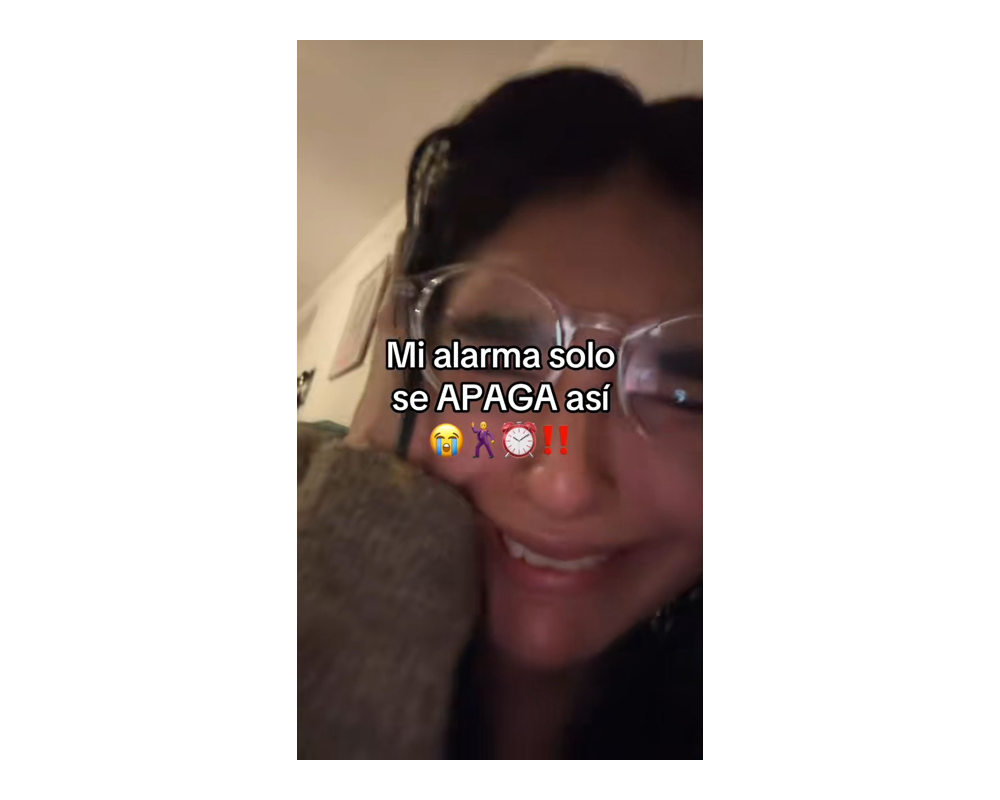
Simple visual system stayed consistent.
sleepy reaction → mission screen → visible tracking → countdown → silence.
One rule makes every video understandable without a feature tour.
Campaign is broad. Distribution is still uneven.
PushClock is not relying on one creator profile.
Dedicated accounts include @cami.pushclock, @mena_pushclock, @sav_get.up, @autumn.pushclock, @jas.wake.up, @bree.wakesup, @andy.pushclock, @jasmine.pushclock, @alexandandi.pushclock and @andiandalex.pushclock.
These are fresh or dedicated campaign identities. PushClock appears in the handle, bio, link or repeated morning series.
KOL posts sit in a separate layer. @jerica94.jj and @ayejeremiah use established personal audiences, so their results should not inflate the Canvas account total.
Reach is uneven, but not dependent on one view band.
- @cami.pushclock - 1.4M views, 154.2K likes and 15.4K shares
- @autumn.pushclock - 507.4K views, 10.4K likes and 7,933 shares
- @cami.pushclock - 28.6K views, 1,293 likes and 91 shares
- @jerica94.jj - 37.7K KOL views, kept separate from Canvas results
Cami reached 1.4M views from a profile with 2,524 followers. Autumn reached 507.4K from 1,269 followers.
That gap shows concepts travelled beyond owned audiences. It does not prove installs or paid efficiency.
What product actually does
PushClock keeps sounding until user completes a physical or cognitive mission.
Current missions include squats, push-ups, dancing, photo tasks, object hunts and math problems. Camera-based counting and completion screens provide visible proof that a tap is not enough.
This creates a clean short-form sequence:
- Alarm creates pressure.
- Creator tries to escape it.
- App reveals a mission.
- Tracking proves work is happening.
- Silence becomes payoff.
Feature and story are same event.
Product loop
- Hook - unusual wake-up rule
- Conflict - snooze behavior fails
- Reveal - mission appears on screen
- Proof - counter, camera or timer tracks progress
- Payoff - alarm finally stops
- Loop - new mission, creator or relationship creates next version
Mission changes. Viewer journey stays familiar.
Why app travelled
Best PushClock videos show consequence immediately.
One winning hook says, "My alarm only turns off like this."
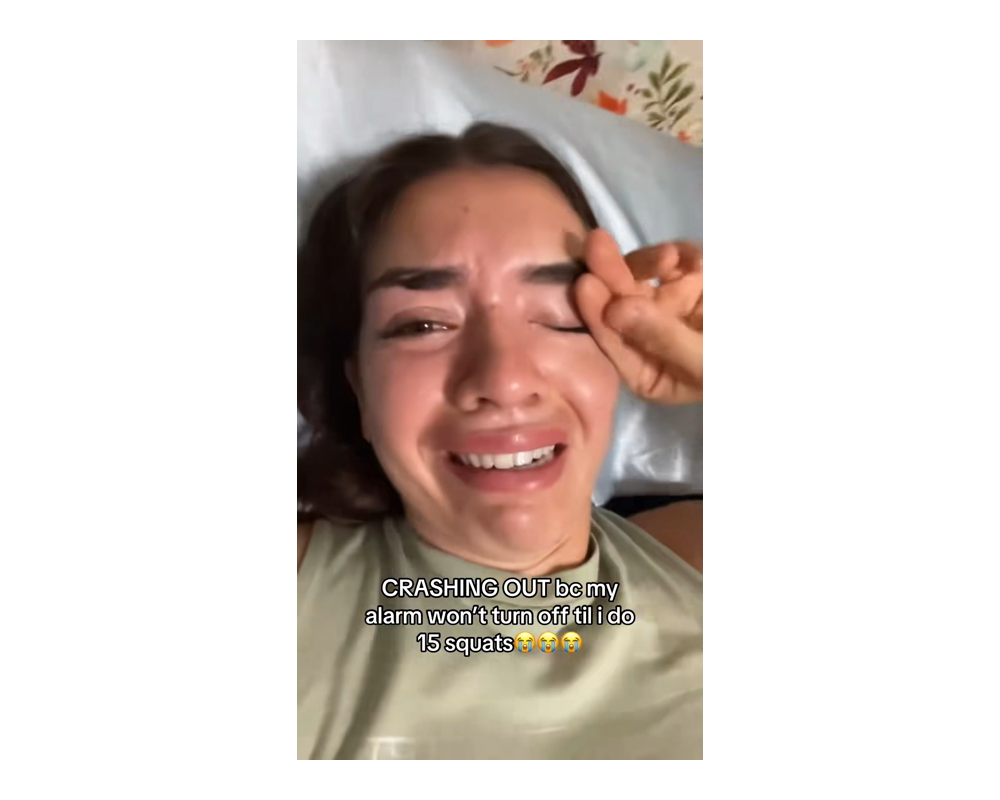
Another says, "Crashing out because my alarm won't turn off until I do 15 squats."
Both lines explain stakes before any feature list.
Sequence usually works like this:
- 0-2 seconds - frustration or unusual claim
- 2-5 seconds - ringing phone and failed snooze attempt
- 5-9 seconds - mission screen and product proof
- 9-15 seconds - movement, counter and rising tension
- Final beat - completion or near-completion
Several growth levers work together:
- Forced consequence gives product a conflict it owns.
- Body tracking makes software visible on camera.
- Student, daughter, couple and heavy-sleeper identities create audience filters.
- Mission rotation produces new concepts without changing product promise.
- High share counts turn videos into "send this to your friend" objects.
Autumn's squat post generated 7,933 shares. That is a stronger creative clue than views alone. Viewer already knows who needs this alarm.
How each platform contributes
TikTok is primary testing layer. Ten dedicated Canvas accounts produced clearest evidence and all three verified performance bands.
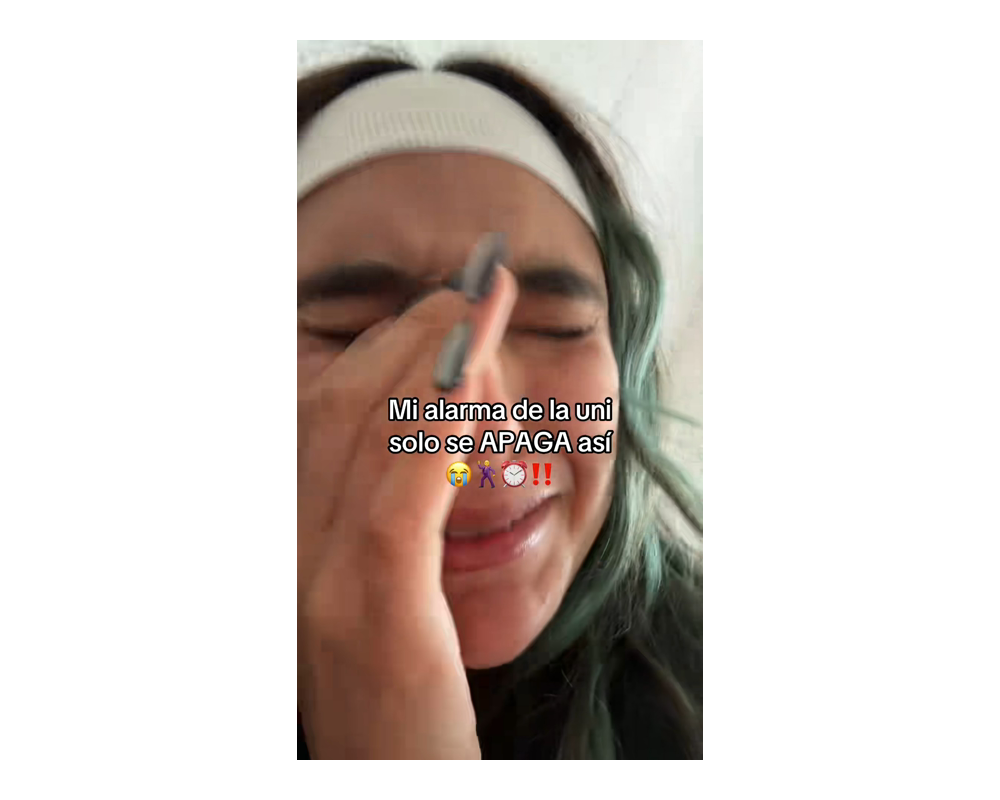
Instagram extends selected identities. Cami and Mena use matching campaign profiles, and Cami showed Reels ranging from roughly 4K to 4.7M visible plays.
YouTube had relevant Shorts, but creator identity and campaign status were not strong enough to verify. No YouTube creator was added to campaign totals.
iOS App Store is conversion proof, not campaign attribution. PushClock is listed in Productivity with a 4.7 rating from more than 6K ratings. Subscription and lifetime purchase options show a direct monetization path.
Picture and Risks
Public evidence supports a real multi-account creator system and repeated viral reach.
Third-party estimates place recent worldwide revenue near $40K and downloads near 70K over 30 days. Treat both as directional. Neither figure proves creator ROI.
True ROI still needs creator spend, usage rights, attributed installs, trials, subscription conversion, retention and refunds.
Main risks remain -
- Repeating identical reactions until audience fatigue sets in
- Mistaking shareable comedy for high-quality subscribers
- Combining Canvas and KOL results into one misleading average
- Expanding to more platforms before creator identity is verified
- Letting reaction overpower product proof
Strong creative keeps interface visible by second three. Without mission screen, video becomes generic morning comedy.
Lesson
PushClock did not make alarm content work by explaining alarms better.
It gave product control over outcome.
App doesn’t give creator silence so their missions becomes the story.
Structure can survive new faces, languages, relationships & mission types because removing PushClock would break the video.
Best test for any product-led UGC concept is simple:
- Remove product from script.
- If ending stays same → weak integration.
- If scene collapses → product belongs.
PushClock passes the test.
Editorial verdict - strong evidence for a product-native hook, active Canvas testing system and repeatable creative format. Moderate evidence for cross-platform expansion. Insufficient public evidence for campaign ROI.
Evidence
iOS App Store - https://apps.apple.com/us/app/pushclock-loud-alarm-clock/id6760209491
1.4M Canvas post - https://www.tiktok.com/@cami.pushclock/video/7671300858218433813
507.4K Canvas post - https://www.tiktok.com/@autumn.pushclock/video/7676894808350264609
28.6K Canvas post - https://www.tiktok.com/@cami.pushclock/video/7671709120646483221
37.7K KOL post - https://www.tiktok.com/@jerica94.jj/video/7657176528882634014
App growth snapshot
Verified creator reach and iOS product signal
Report date unavailable
- Canvas accounts
- 10
- Active dedicated TikTok accounts verified
- Top verified post
- 1.4M
- Exact TikTok views for @cami.pushclock
- Cross-platform identities
- 2
- Matching Canvas profiles verified on TikTok and Instagram
Public creator metrics show repeat winners across 28.6K, 507.4K and 1.4M views. Third-party revenue estimates are directional and do not establish campaign ROI.
Historical figures reported by the source, not independently verified. These are app-wide figures, not results for this post or an Adworkly campaign. No post-level views, spend, installs or conversion attribution have been verified.
Want a pipeline of UGC like this?
Adworkly runs creator sourcing, hook testing, and UGC production for consumer apps — 90 to 250 hook tests a week.