

Mise
Growth teardownLibrary ID: report-crosstalk-growth-teardown
One Breakup Story Carried Crosstalk Through an 81.3M-View Product Pivot
- Platform
- TikTok
- Format
- Pattern interrupt
- Category
- Social
- Posted
- 4 Oct 2026
Creative breakdown
Crosstalk used three dedicated TikTok identities and one repeatable breakup storyline to generate 81.3M observed lifetime views. The same creator world survived the move from Shorty.now to Crosstalk, but recent reach remains concentrated.
Our take
Crosstalk built one creator-led breakup universe before launch, then carried the same emotional conflict through a product rename. Reach was large but heavily concentrated in one account and a few breakout posts.
Adapt for your brief
Build one familiar relationship conflict before product reveal, then carry the same creator world through launch, rebrand and expansion.
Our take and suggested adaptations are editorial interpretation, not measured results.
Full strategy breakdown
Crosstalk’s three TikTok campaign accounts accumulated 81.3M lifetime views across 181 visible posts. Those are combined post views, not unique viewers.
Most reach came from one creator account that kept its relationship-story format through the move from Shorty to Crosstalk.
Crosstalk did not build its current campaign from zero.
The main account started relationship stories before the iPhone launch, accumulated most of its reach under Shorty, then used the same ten-year breakup conflict when Shorty became Crosstalk.
- 3 dedicated TikTok creator accounts
- 181 visible lifetime campaign posts
- 81.3M observed lifetime views
- 20.7M observed views in the latest 90 days
- 16.6M views on the strongest exact post
- 106 campaign posts published in the latest 90 days
The campaign repeatedly used the same story structure. That does not make its distribution predictable.
Three accounts. One breakup universe.
@heyyitscasss, @mira81159 and @me.sidney are dedicated campaign identities.
Each account returns to relationship conflict, oversized messages and app-generated videos. Dedicated identities make the content premise portable instead of tying it to one influencer’s personal audience.
Seed account came before launch.
@heyyitscasss began posting in February 2026, before the iPhone app launched.
Early posts paired relationship conflict with an oversized message, a dismissive reply and gameplay. Shorty converted the text into a narrated video that returned to the same conversation.
Main account produced 125 visible lifetime posts, 79.2M observed views, 3.7M likes and 8,106 followers.
Follower-to-view gap suggests ideas travelled far beyond the account's owned audience.
Rebrand reused familiar conflict.
Cass opens with - "how I broke up with my bf of 10 years”
Post reached 16.6M views, 920.8K likes, 129.7K saves and 50.5K shares.

The hook promises a breakup outcome. “Not reading all that lol” then makes message length the obstacle. The creator uses the product to turn the text into something the partner can watch.
The July post reused an earlier premise under the new product name. That is the rebrand decision worth copying - preserve the reason people watch before introducing a different product story.
Tutorial turns curiosity into product proof.
Creator opens with - "How I make these videos in under 30 seconds"
The tutorial reached 38.1K views, 1,089 likes, 911 saves and 121 shares.
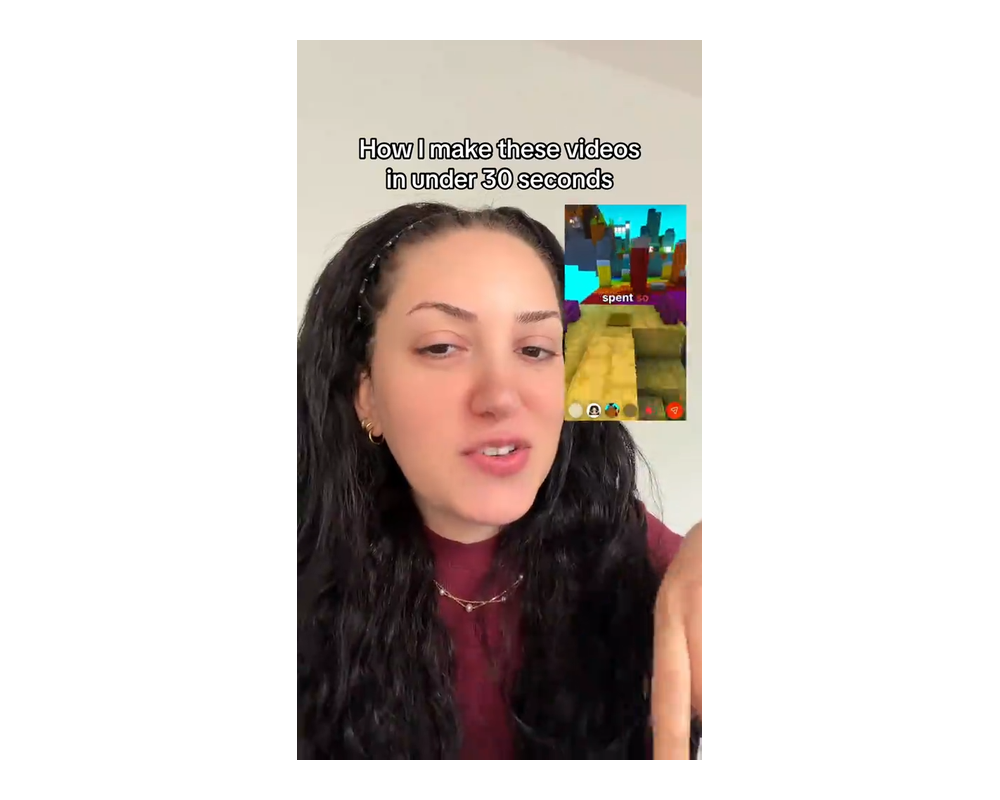
Cass pastes the message, selects voice and caption styling, generates the clip and sends it. The walkthrough explains the product action viewers saw in the breakup story.
Fresh accounts widen the same system.
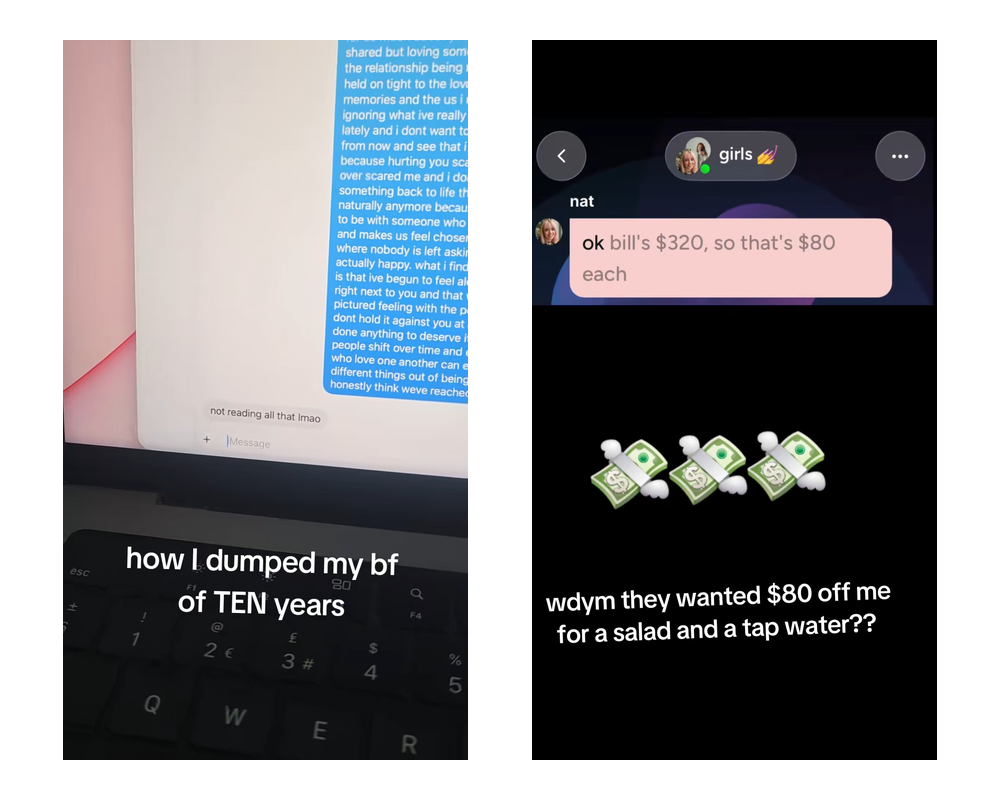
@mira81159 reached 357.6K views within four days using - "how I dumped my bf of TEN years"
@me.sidney reached 309.8K views with an $80 salad and brunch-split conflict.
Product changed. Story engine stayed.
Crosstalk now offers private rooms where friends can send text, voice or video messages and customize how each message sounds and looks.
The product widened beyond video generation. Sidney’s bill-split story shows how the same message-conflict structure can fit group chats.
- recognizable relationship conflict
- message viewer refuses to read
- creator converts it with product
- output returns to conflict
- soft app mention
- next story variation
Reach is real. Distribution is fragile.
Three posts on Cass’s account produced 52% of that account’s lifetime views.
16.6M-view post produced 84% of main account's latest 90-day reach.
Recent posts ranged from low thousands to mid tens of thousands. Campaign has proven attention, but not a stable view floor.
Views tell us which stories earned attention. The next test is whether those viewers create rooms, invite friends and return.
What to copy
- Seed one dedicated creator identity before launch.
- Build one emotional world instead of disconnected trends.
- Reuse familiar conflict through product changes.
- Turn a winning story into a product tutorial while curiosity is high.
- Open fresh accounts with proven narrative structure, then change the tension.
- Track activation and retention separately from views.
Keep the product inside the conflict. Then test whether the format travels to new creators and produces activation, not just another view spike.
App growth snapshot
Verified creator-network reach and concentration
Report date unavailable
- Lifetime views
- 81.3M
- Visible views across three verified TikTok Canvas accounts
- Top verified post
- 16.6M
- Exact TikTok views for main creator account
- Canvas accounts
- 3
- Active dedicated TikTok accounts verified
Three verified TikTok Canvas accounts produced 181 visible lifetime posts and 81.3M observed views. Public data does not establish installs, revenue or campaign ROI.
Historical figures reported by the source, not independently verified. These are app-wide figures, not results for this post or an Adworkly campaign. No post-level views, spend, installs or conversion attribution have been verified.
Want a pipeline of UGC like this?
Adworkly runs creator sourcing, hook testing, and UGC production for consumer apps — 90 to 250 hook tests a week.