
Knowunity: AI Study Tutor
Growth teardownLibrary ID: report-equals-growth-teardown
EQUALS found a 37-million-view question hiding inside music fandom
- Platform
- TikTok
- Format
- Pattern interrupt
- Category
- Social
- Posted
- 11 Sept 2026
- By
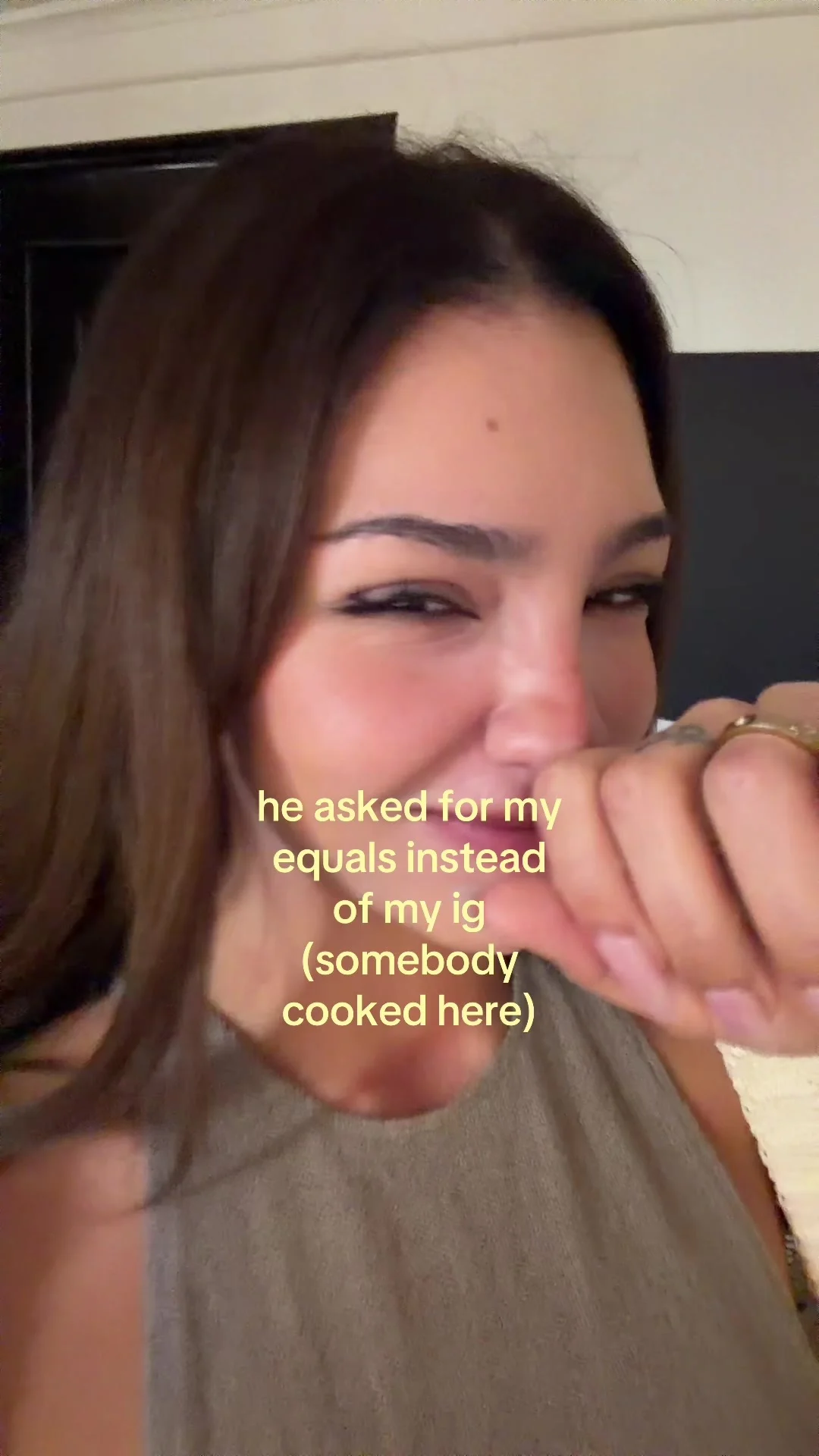
- @babymila222 for EQUALS
Creative breakdown
EQUALS turns music knowledge into an identity test, then uses the answer to reveal the product and make sharing feel natural. The product demo becomes the payoff.
Our take
The creative system is memorable and product-native, but the reported reach is highly concentrated. Treat the headline totals as evidence of a powerful hook, not proof of repeatable unit economics.
Adapt for your brief
Advertise the self-discovery moment your product creates. Build a short creator sequence around a question, a real in-product reveal, and a result people want to compare or share.
Our take and suggested adaptations are editorial interpretation, not measured results.
Full strategy breakdown
The useful lesson is not “get a viral creator.” It is to turn a product action into a question people instinctively answer about themselves.
EQUALS is a music-first social app. Its breakout creative did not begin by explaining a new network or cataloguing features. It began with a sharp identity question: can someone recognize a song from an extremely small cue? The creator supplied tension; the app supplied the reveal; and the result created a reason to compare tastes with other people.
A third-party case study reports 244.4 million views across six creator accounts, with roughly 79% of that reach attributed to the leading account and one breakout hook reported at 37 million views. Those are historical campaign claims, not audited platform data. The pattern is still strategically useful because the product is visible inside the entertainment rather than attached afterward.
The hook turned music taste into an identity test
“Do you know this song?” works because the viewer can participate before understanding the product. It is a low-friction challenge with an immediate emotional stake: knowing the answer says something about taste, memory, belonging, or status inside a fandom.
The app contains the dramatic object—the song, the clue, the recognition moment, and the social context. That makes the creative feel closer to entertainment than a conventional product demo.
The creative sequence
- Lead with the question or micro-challenge before naming the app.
- Use a recognisable creator reaction to create curiosity and social proof.
- Reveal the answer inside the actual product so the demo resolves the hook.
- End on a social payoff: compare, challenge a friend, share a result, or find people with the same taste.
The sequence is compact enough for short-form feeds and modular enough to repeat with different songs, fandoms, difficulty levels, and creator personalities. The variable changes, but the viewer journey stays familiar.
The product loop
- Hook — a question the viewer can answer without context.
- Reveal — a real product interaction resolves the question.
- Connect — the answer exposes taste or identity.
- Social payoff — the result is worth comparing with another person.
- Loop — a new song, fandom, or creator creates the next version.
Why it travelled
- It gives viewers a role. They solve the prompt instead of passively receiving a pitch.
- The answer creates a small status signal: knowledgeable, nostalgic, surprising, or culturally fluent.
- The app appears at maximum curiosity, so the product reveal earns attention.
- Multiple creator accounts can run the same mechanism without posting identical executions.
- Music supplies an almost unlimited set of culturally specific prompts.
Scale came with concentration risk
The same evidence that makes the campaign look impressive also reveals its weakness. If most reach comes from one account and one concept, the headline total can conceal a fragile distribution system. A sustainable program needs several creators and hook families that clear a meaningful baseline without depending on one outlier.
The public profile snapshot reviewed for this teardown also showed more modest recent view counts than the historical peaks. That does not invalidate the creative insight; it means the 244.4-million total should not be treated as a current run rate.
What another app can copy
- Find the product action that reveals something about the user: taste, skill, progress, compatibility, or identity.
- Write questions that work even when the viewer has never heard of the app.
- Show the product early enough to own the payoff, but after the question creates curiosity.
- Build three to five repeatable hook families rather than endlessly reskinning one viral line.
- Track creator concentration, hook concentration, and median performance—not only aggregate views.
- Treat comments as research. Confusion, bragging, disagreement, and requests for another version are inputs for the next creative.
What the evidence does not prove
The available sources do not establish revenue, paid conversion, CPI, CAC, retention, or the incrementality of creator views. They also do not identify a verified agency responsible for the work. The campaign totals and the public store install floor are separate observations, not a conversion funnel.
Editorial verdict: strong evidence for an effective product-native hook and a scalable creative format; moderate evidence for a durable multi-account distribution system; insufficient evidence for business efficiency.
Sources and methodology
- Social Growth Engineers case study — third-party campaign totals and account concentration, published 9 February 2026
- Google Play listing — public Android install floor captured during the research window
- Apple App Store listing — product positioning and app identity
- EQUALS privacy policy — first-party product and legal identity check
- @babymila222 public profile mirror — recent public-post snapshot used only as directional context
Research cutoff: 10 September 2026. Historical performance claims are labelled as third-party reports; current-store and profile observations are snapshots and may change.
App growth snapshot
Reported campaign reach and current install floor
Reported 10 Sept 2026
- Campaign views
- 244.4M
- Third-party case-study total across the reported six-account creator system
- Top hook
- 37M
- Third-party reported views for the breakout identity-question video
- Google Play installs
- 500K+
- Public store floor captured during the research window
Campaign figures come from a third-party case study; the install figure is a public store floor. They measure different things and should not be read as an attribution funnel.
Historical figures reported by the source, not independently verified. These are app-wide figures, not results for this post or an Adworkly campaign. No post-level views, spend, installs or conversion attribution have been verified.
Want a pipeline of UGC like this?
Adworkly runs creator sourcing, hook testing, and UGC production for consumer apps — 90 to 250 hook tests a week.