
 UGC Infra
A Practical Guide to the Creative Ad
Learn what a creative ad is and why it matters for growth. This guide breaks down the key elements and frameworks you need to build effective ads.
A creative ad involves more than a single picture or text line. It uses video, images, sound, and words to present a brief, engaging narrative. This package stops a user mid-scroll and prompts action.
What Defines a Creative Ad
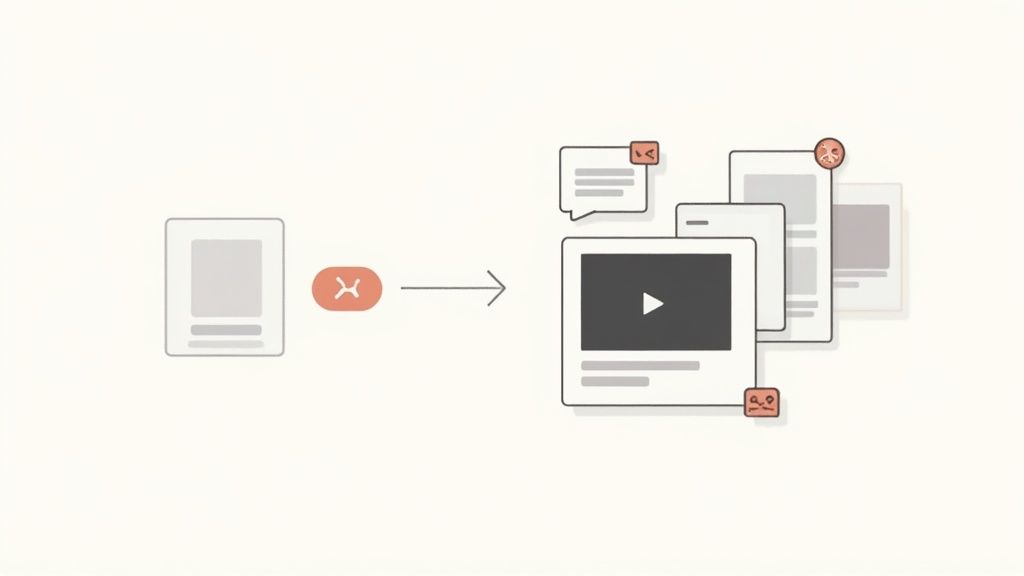
A creative ad serves as a mini-pitch for your app or product. While a simple static image can show what your app looks like, a great creative ad shows how it fits into a user’s life, solves a real problem, or makes them feel something. It stands as a powerful tool for talking to new customers.
This difference matters when people see hundreds of ads each day. A basic product screenshot is easy to ignore and scroll past. A dynamic video with a punchy headline and a clear call to action feels harder to ignore. The goal remains the same: make them stop, watch, and click.
The Power of Multiple Assets
The best creative ads include multiple elements working together to deliver a clear message. Each element has a role.
Here is a breakdown of key components and their functions.
Components of a Modern Creative Ad
When these elements come together, you present a solution, an experience, or an emotion, which static images cannot deliver. This integrated approach cuts through noise and builds a connection a static image cannot match.
Why Quality Creative Is Non-Negotiable
The world of digital advertising grows, but connecting with people grows tougher. For instance, global ad spend has jumped 33% since 2023, while purchase intent from this spending grew by 17%. This gap shows spending more fails to secure user interest. Your creative must resonate. With digital platforms projected to handle 73% to 75% of all ad revenue, the quality of your ad stands as a top competitive advantage. Read the creative impact gap and its implications.
Why Creative Ads Are Your Biggest Growth Lever
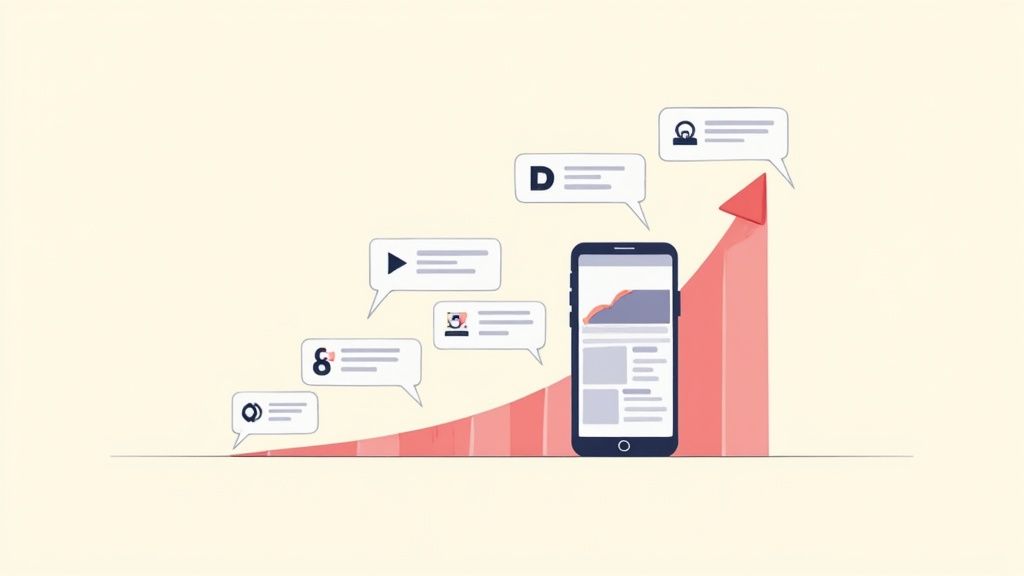
In a crowded market, ad creative remains the most important factor for scaling your app. It has a direct, measurable impact on acquisition cost and campaign success. When your ads connect with people, your business grows.
A well-crafted ad does more than look pretty. It attracts the right users and lowers cost per install (CPI). This efficiency makes every budget dollar stretch further, reaching more people without throwing extra funds at the problem. Great ads attract users interested in your offer who stay engaged. This boosts the lifetime value (LTV) of each user and improves return on ad spend (ROAS), the benchmark for sustainable growth.
The Financial Impact of Great Creative
A generic ad wastes budget with low impact. A high-quality ad yields more results for the same spend. The link between creative quality and your bottom line remains direct. Teams investing in high-quality, engaging ads report lifts in key metrics.
A superior creative ad is your primary lever for improving campaign profitability. Small improvements in your ad’s performance can lead to significant gains in your return on ad spend.
For example, a 10% drop in CPI from a better ad lets you acquire 10% more users with the same budget. Over months, small wins stack up and build momentum for your app. This shows how investing in creative yields repeated returns.
Staying Competitive in a Growing Market
The digital ad space grows louder every year. Global ad spending will rise by 7.4% in 2025 to about $1.17 trillion. Social media platforms will claim 40.6% of new ad dollars. See the full picture when you discover insights about the digital ad boom at Marketing Dive.
More competition lies ahead. To stand out, your ads must stop the scroll and deliver your message instantly. You achieve this by focusing on authenticity. User content builds trust. Read learn more about user-generated content in our detailed guide and see how it becomes a cornerstone of your strategy.
Your creative ad emerges as a core driver of company financial health and a critical tool for scalable growth in today’s packed digital world.
What Makes a Great Ad? The 3 Core Elements
Every effective ad, for a mobile game or a productivity tool, relies on three core elements. Nail these and your ad stops the scroll, delivers a point, and drives action.
It matches a concise, engaging message. You need an opening line that draws attention, a middle that explains the benefit, and an ending that instructs the audience. Missing any part renders the ad ineffective.
The Hook: Stop the Scroll in 3 Seconds
The hook covers the first one to three seconds. Its goal jolts viewers from scrolling and makes them look up. On a packed social feed, you have a split second to register before attention moves on.
A strong hook surprises visually, builds emotion, or poses a question to spark curiosity. For example, a language app ad could open with a traveler ordering coffee in fluent Japanese. You show the outcome and attract viewers who share that goal.
Your first three seconds decide if your ad gets viewed further. The hook must win user attention.
Without a solid hook, your message loses effect when viewers leave before they see it.
The Core Message: Get to the Point, Fast
You have their attention. Your core message explains why your app matters by showing how it solves a problem or delivers a key benefit.
Avoid listing every feature. Focus on one big benefit. For a fitness app, use “get fit in 10 minutes a day” instead of “we have 500 workout videos.” Read our guide to improving your ad creative.
Use simple language and visuals that support your promise. Aim for clarity, not complexity.
The Call to Action: Tell Them What to Do Next
Every ad ends with a clear Call to Action (CTA). This instruction prevents confusion.
Common CTAs include:
- Download Now
- Play for Free
- Learn More
- Shop the Collection
Your CTA must match your goal. For installs, use Download Now. Present it as a noticeable button or text overlay. An ad without a clear CTA leaves viewers unsure and they move on.
Proven Frameworks for Building Your Ads
Use proven frameworks to give structure to your ad. These models guide you in creating concepts that deliver results. Following a framework gives your ad a logical flow that walks a viewer from “What’s this?” to “I need this.” It shifts the process from guesswork to predictable results.
The AIDA Framework
AIDA stands for Attention, Interest, Desire, and Action. It breaks the customer journey into four stages with a clear sequence.
- Attention uses an unexpected hook like a surprising visual or question to stop the scroll
- Interest builds relevance by focusing on benefits instead of features
- Desire makes viewers want the outcome by showing clear benefits and social proof
- Action gives a direct CTA such as Download Now or Get Free Trial
Each element from hook to CTA works together to guide users toward conversion.
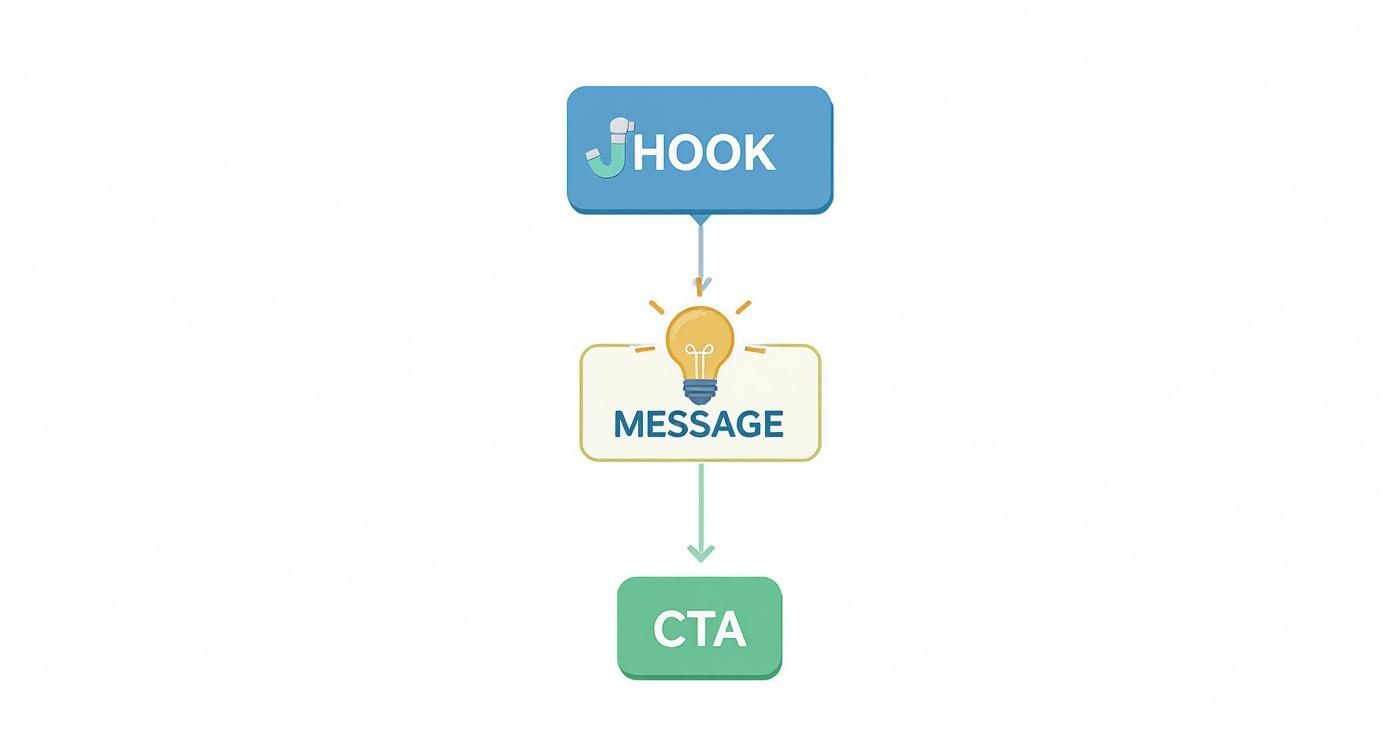
An effective ad follows a clear path: powerful hook, concise message, direct call to action.
The PAS Framework
This framework fits apps that address a specific pain point. It taps into frustration and positions your app as the logical solution.
First, identify a Problem your audience has. For example, Tired of wasting hours at the grocery store every week?Next, Agitate the problem by highlighting related negative emotions. For example, show someone stressed in a crowded aisle. This step makes the problem feel urgent.Finally, present your app as the Solution, for example, Get your groceries delivered in 30 minutes. This three-step process engages users emotionally and offers a clear path forward.
The PAS framework works by positioning your product as a necessary solution to a real-world annoyance.
Modern UGC-Style Frameworks
Creating ads that mimic user-generated content (UGC) feels authentic. These ads build trust with audiences skeptical of polished corporate marketing.
These ads follow a simple structure: a real person presents a problem, shows how the app solved it, and recommends it. They look like a friend’s review. UGC-style ads blend into social feeds and yield higher engagement rates.
Creative Ad Framework Comparison
Select frameworks based on product, audience, and goals. Experiment with different models to find what resonates with your target users.
How to Test and Optimize Your Creative Ad

A great creative ad requires testing and optimization. Launching your ad marks step one. Growth follows when you test and refine it methodically.
Treat your first ad as a baseline. Use data to identify which elements engage your audience. Use structured A/B testing. Change one element at a time to pinpoint which parts boost performance. This method replaces guesswork with data and guides informed decisions.
Setting Up Your A/B Tests
Testing without a plan leads to confusing results. Start with a clear goal. Are you aiming to lower cost per install (CPI), raise click-through rate (CTR), or increase in-app purchases? This goal determines your metrics.
Then, form a clear hypothesis. For example, raw gameplay video ads will drive more installs than cinematic character backstories. This statement gives your test purpose and clarifies result interpretation.
Avoid testing multiple elements simultaneously. If you change the headline, video, and CTA in one test, you cannot know which change caused performance shifts. Test one variable at a time to gain clear, actionable insights.
Key Variables to Test
Focus on high-impact elements that grab attention and influence decisions.
- VisualsTest different video concepts, image styles, or opening hooks. For example, compare a gritty UGC-style video with polished animation.
- HeadlinesTest a benefit-driven headline like Master Your Skills against a curiosity-driven one like Can You Beat Level 5?
- Call to Action (CTA)Test CTA text variations, such as Play Now versus Download Free.
Testing aims to build knowledge about which messaging, visuals, and offers connect with your ideal users rather than simply find one winner.
Using Data to Iterate and Improve
After a test ends, review key metrics — CTR, conversion rate, CPI — and identify a winner. Use the winning version as your new control or champion creative. Next, launch another test against the champion version. For example, test a new CTA or opening scene. This cycle of testing, learning, and optimizing drives continuous improvement in your campaigns.
As you collect data, patterns emerge, sharpening your instinct for effective ads. New tools accelerate the process. Read ad creative AI to accelerate your testing to uncover winning ideas sooner.
By embracing a testing culture, you shift advertising from expense to a data-driven growth engine that improves with each dollar spent.
Got Questions About Creative Ads? We've Got Answers.
Below are common questions about producing, measuring, and strategizing creative ads.
How much should I allocate to creative production?
Allocation depends on scope and production value. There is no fixed number.
A raw UGC-style video shot on an iPhone often costs little. A professionally animated spot often costs significantly more. Budget correlates with scope and production value.
Begin by allocating a percentage of ad spend to creative production and testing. As campaigns deliver results, reinvest part of the return into new creative. This process forms a self-sustaining improvement loop.
How do I know if my ad works?
Track the right numbers with data-driven KPIs that align with campaign goals.
Quick breakdown:
- Growing Your User Base?Monitored metrics: Cost Per Install (CPI) and Install Rate, which measure cost to acquire each download.
- Trying to Grab Attention?Attention metrics: Click-Through Rate (CTR) and Video Completion Rate indicate both ad notice and viewer engagement.
- Focused on the Bottom Line?For revenue impact: Return On Ad Spend (ROAS) measures whether ad spend generates profit.
Remember, the ultimate test of an ad lies in profitability. An ad may have a high CTR but without profitable users, it remains a distraction.
How often should I refresh my creatives?
Ad fatigue reduces performance when audiences recognize the same creative. Define a schedule for rotating creative to maintain engagement.
Frequency depends on budget and audience size. High-budget campaigns targeting small audiences require weekly creative refresh. Broader campaigns may refresh every few weeks or monthly.
What's the biggest mistake?
The biggest mistake involves creating ads based on personal preference instead of data. Many teams design ads they love without considering target audience interests. This approach wastes budget without results.
Start with audience research and create a testing plan before spending budget. Let performance data guide decisions. The top ad does not feature clever design or high production value, but one that audiences respond to. Data-driven decisions replace costly guesses and build an effective ad strategy.
At Adworkly, we combine expert strategy and AI to build creative ad campaigns that deliver measurable growth. See how we help your app win at https://adworkly.co.