Mobile App Marketing Automation: Growth Tactics for Apps
Discover mobile app marketing automation essentials to boost user acquisition and retention with proven workflows and tools.
Mobile app marketing automation is a way to create personalized, one-on-one experiences for your users, but on a massive scale. It's the smart software that handles all the repetitive but crucial tasks, like sending welcome messages or nudging inactive users. This frees you up to focus on the bigger picture. For any app founder serious about growth, this isn't a "nice-to-have"; it's the engine that will drive both user acquisition and retention.
The Engine Behind Scalable App Growth
At its heart, marketing automation is about using technology to run your marketing playbook without you having to press "send" every single time. Think of it as your most dedicated employee, working 24/7 to nurture every user through their unique journey with your app. This is so much more than just scheduling a few push notifications. It’s about building a dynamic system that reacts to what your users actually do in real-time.
For instance, the moment someone new signs up, an automated workflow can kick off a welcome series. The first message might show them how to set up their profile, a second could highlight a key feature, and a third might offer a first-time user incentive. This is how you guide people to that all-important "aha!" moment and turn a curious downloader into a loyal fan.
From Manual Toil to Smart Systems
Trying to scale an app without automation is an uphill battle you'll eventually lose. As your user base grows, manually sending personalized messages, segmenting audiences, or trying to manage campaigns across TikTok and Google Ads becomes completely unmanageable. Automation is what ties all these moving parts together into a single, cohesive growth machine.
A smart automation strategy is built on a solid foundation of data. By tracking what users do inside your app, which features they use, what they buy, when they become inactive, you can set up triggers for your marketing messages. A classic example? A user adds an item to their cart but gets distracted. A few hours later, an automated push notification can pop up with a gentle reminder, maybe even a small discount to seal the deal.
For app founders and growth teams, this shift from manual effort to automated systems is the key to unlocking sustainable growth. It lets small teams punch way above their weight, focusing their brainpower on strategy instead of getting bogged down in repetitive tasks.
Why This Matters for App Founders
Putting a solid marketing automation system in place delivers real, measurable results that directly impact your app's success. It’s a core piece of any modern mobile app marketing strategy and the benefits are clear.
Here's what you stand to gain:
- Slicker User Onboarding: You can automatically walk new users through your app’s best features, which massively boosts the chance they'll stick around for the long haul.
- Higher Engagement and Retention: Proactively reach out to users who are starting to drift away. A personalized offer or a reminder about a new feature can stop churn before it even starts.
- True Personalization: Send messages that actually mean something to the user based on their behavior. This makes your communication feel helpful and timely, not like spam.
- More Efficient Ad Spend: When you increase the lifetime value (LTV) of each user, you can afford to be more competitive with your user acquisition costs. Better retention makes your ad budget go further.
Ultimately, automation is about building stronger relationships with your users at a scale that would be impossible to manage by hand. It ensures every user feels seen and understood, which leads directly to better retention, more five-star reviews, and a brand people genuinely love.
Building Your Automation Foundation
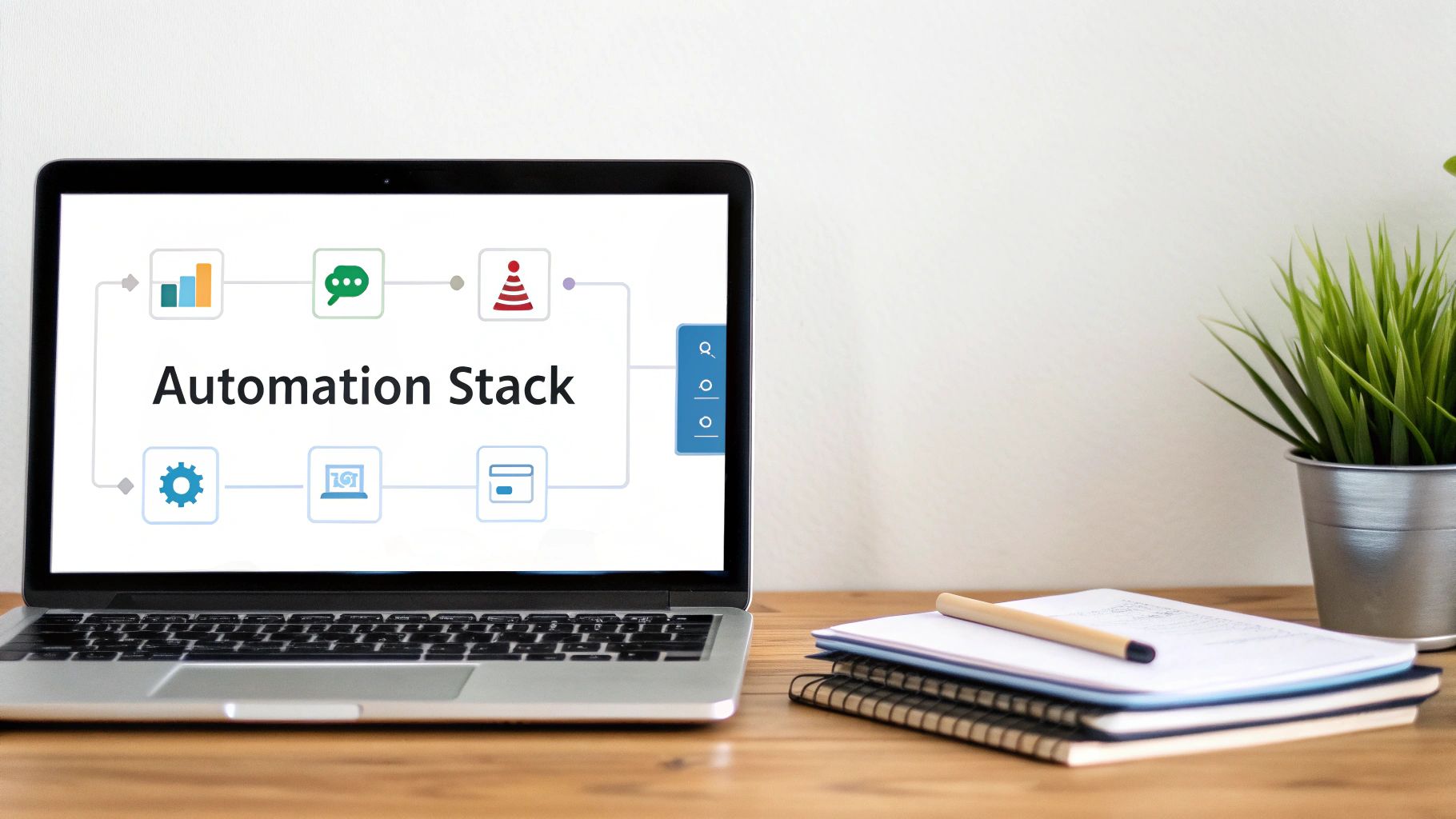
Effective automation isn't about flipping a switch on some magical software. It's about building a connected system, a tech stack, where data can flow freely between your tools. Before you can design those clever, personalized user journeys, you need this foundation in place. It’s what turns raw user behavior into the right marketing message at the right time.
Think of it like building a house. You wouldn't put up walls without pouring a solid concrete foundation first. Each piece of this stack has a critical job, and when they're all wired together correctly, they create a seriously powerful engine for growth.
Unifying User Data with Analytics and CDPs
It all starts with knowing what people are actually doing in your app. This is where a good product analytics platform comes in. These tools are your eyes and ears, tracking every tap, swipe, and purchase.
Platforms like Amplitude or Mixpanel let you track key events. These events could be a user finishing the tutorial, making their first purchase, or using a core feature three times. This granular data is the fuel for every automated campaign you’ll ever run. It’s how you spot your best users and identify where others are getting stuck.
But analytics data often lives on an island. To make it truly useful, you need a central hub. A Customer Data Platform (CDP) like Segment or mParticle acts as the nervous system for your tech stack. It pulls data from your app, analytics, and other sources, cleans it up, and then pipes it into your marketing automation platform.
A CDP gives you a single, unified profile for every user. This "source of truth" ensures that when you trigger a push notification or an email, it's based on the most complete and accurate picture of that person's behavior.
Connecting Acquisition to In-App Behavior
Knowing what users do is half the puzzle. The other half is knowing where they came from. That’s the job of a Mobile Measurement Partner (MMP), also known as an attribution provider. Tools like AppsFlyer or Adjust tell you exactly which ad campaign, social post, or influencer sent a user your way.
Integrating your MMP with your analytics and automation tools is a game-changer. It closes the loop between what you spend to acquire a user and how valuable they become over time. Suddenly, you can answer mission-critical questions:
- Which ad networks deliver users with the highest lifetime value?
- Do users from TikTok campaigns behave differently than users from Google Ads?
- What’s our true return on ad spend (ROAS) when we look at long-term engagement?
This connection is what separates a decent marketing strategy from a great one. It allows you to get smarter with your ad spend, focusing on the channels that bring in genuinely engaged users, not just empty installs. For instance, if you discover that users from a specific video ad have a 30% higher retention rate, you know exactly where to put your next dollar.
Automating Creative Operations
Finally, a truly sophisticated automation stack doesn't stop at user messaging. It extends all the way to your creative process. Connecting your creative systems directly to your ad platforms can save you hundreds of hours of mind-numbing manual work.
Imagine automatically generating hundreds of ad variations by mixing and matching different images, headlines, and calls-to-action. Tools in this space can then programmatically launch A/B tests on platforms like Meta or TikTok, monitor performance, and shift the budget to the winning combos on their own. This creates a continuous optimization loop, ensuring your campaigns are always running with the most effective creative. It’s a massive, scalable advantage.
Designing Your Core Automated Workflows
Now that you've got your data flowing, it's time for the fun part: putting that data to work. This is where you move from strategy to action, building automated campaigns that guide users through every stage of their journey with your app.
This isn't about blasting out generic messages. It's about creating smart, trigger-based workflows that feel personal and timely. These systems act as your app's ever-vigilant growth engine, ensuring every user gets the right message at the right moment.
Let's walk through the four essential workflows that form the backbone of any successful app automation strategy.
Powering Acquisition with Lookalike Audiences
Believe it or not, your automation efforts can start before someone even downloads your app. One of the most effective ways to acquire high-quality users is to find more people who look just like your current best customers. The whole process hinges on syncing specific user segments from your app to your paid ad platforms.
Take a fitness app, for example. Their dream users are probably the ones who have completed at least 10 workouts and upgraded to a premium plan. That segment is pure gold.
Here’s how you can automate this powerful loop:
- Pinpoint Your VIPs: Dive into your analytics to identify the in-app actions that correlate with high lifetime value (LTV). This could be making a purchase, completing a specific milestone, or hitting a certain engagement threshold.
- Sync Your Segment: Set up your CDP or marketing automation platform to automatically push this VIP audience to ad networks like Meta, Google, or TikTok.
- Build the Lookalike: Inside the ad platform, use that seed audience to create a lookalike audience. The platform's algorithm will then work its magic, finding millions of new people who share the same characteristics and online behaviors as your best users.
This creates a self-improving cycle. As new users sign up and become VIPs, they're automatically added to the segment, constantly feeding the ad platforms fresh data to refine your targeting. You end up spending your ad budget far more efficiently.
Crafting a Seamless User Onboarding Sequence
The first few days after an install are make-or-break. A clunky, confusing experience is a one-way ticket to an uninstall. A well-designed, automated onboarding flow is your best chance to make a stellar first impression and guide users to their "aha!" moment. This is the magical point where they get the value your app delivers.
Your goal during onboarding isn't to show off every feature. It's to get a new user to complete one key action that proves your app's worth, and to do it as quickly as possible.
Imagine a language-learning app. Their "aha!" moment is likely when a user breezes through their first lesson. The entire onboarding workflow should be laser-focused on getting them to that win.
A smart onboarding sequence could look like this:
- The Instant Welcome: The moment the app opens for the first time, trigger a short series of in-app messages that give a quick tour of the essentials.
- The Gentle Nudge: If a user hasn't started a lesson within 24 hours, send a friendly push notification: "Ready for your first 5-minute lesson? Let's go!"
- The Celebration: Immediately after they finish that first lesson, fire off an in-app message congratulating them and pointing them toward the next logical step.
By using different channels like in-app messages and push notifications, you can guide users naturally without being annoying.
Proactive Re-engagement to Prevent Churn
Even your most active users can lose steam. A proactive re-engagement workflow is your early warning system. It's designed to spot when a user’s activity starts to dip and automatically send a timely message to pull them back in before they churn for good.
First, you need to define what "at-risk" looks like for your app. For a social media app, maybe it's no logins for seven days. For a meditation app, it could be missing three daily sessions in a row.
Once a user falls into this at-risk segment, the automation kicks in. Let's say a user of a recipe app hasn't opened it in 15 days. You could trigger a push notification showcasing a new, mouth-watering recipe. If there is no response, a few days later, an email with a "Quick Weeknight Dinners" collection could be the perfect reminder of why they downloaded your app in the first place. These small, timely nudges are central to solid mobile app retention strategies.
Winning Back Churned Users with Smart Offers
No matter how good your app is, some users will leave. A win-back campaign is your automated last-ditch effort to bring them back. These people are already familiar with your brand, so you just need to give them a compelling new reason to give you another shot.
Start by defining what a "churned" user is. A common definition is someone who has been inactive for 60 days. Once a user crosses that threshold, they enter your win-back flow.
A killer tactic here is to combine a personalized message with an exclusive offer. For an e-commerce app, this might be an automated email that says, "We miss you! Here’s 25% off your next purchase to welcome you back." To really amplify the message, you can sync this churned segment to your ad platforms and run retargeting ads with the same offer. This multi-channel assault dramatically increases the odds of them returning.
Essential Automated Workflows for App Growth
To bring it all together, these four workflows are the foundation for sustainable app growth. Each one targets a critical stage of the user lifecycle, ensuring you're automatically engaging users at the moments that matter most.
By implementing these core automated sequences, you build a resilient system that not only attracts users but also keeps them active and engaged for the long haul.
Choosing The Right Automation Tools
Once you've mapped out your strategy and the key workflows you want to build, it's time to pick the software that will bring it all to life. The market for mobile marketing automation is crowded, and frankly, a bit overwhelming. The real trick is finding a platform that fits where you are now but has the horsepower to grow with you.
Choosing your tool isn't just a line item on a budget; it's a strategic move. It dictates how efficiently your team can work, how well you can scale, and ultimately, how you connect with your users. In today's app ecosystem, this isn't about getting an edge anymore. It's table stakes.
All-In-One Platforms Versus Point Solutions
Your first big decision is whether to go with an all-in-one suite or piece together a few specialized, best-in-class tools. There’s no single right answer here. It really comes down to your team's budget, technical chops, and what you’re trying to achieve.
- All-In-One Solutions: Think of platforms like Braze or CleverTap. These are the heavy hitters designed to be a single source of truth for user engagement. They bundle everything like push, in-app messages, email, and SMS with sophisticated analytics and A/B testing. They're incredibly powerful but often come with a serious price tag and a steeper learning curve.
- Point Solutions: These are tools that do one thing exceptionally well, like OneSignal for push notifications. They're usually much easier to get up and running, more affordable, and perfect for getting started. The trade-off is that you'll likely need to patch together several tools, which can create data silos and headaches if you're not careful.
This is why understanding the user journey is so important. Your tool needs to support every stage, from getting a user in the door to keeping them around.
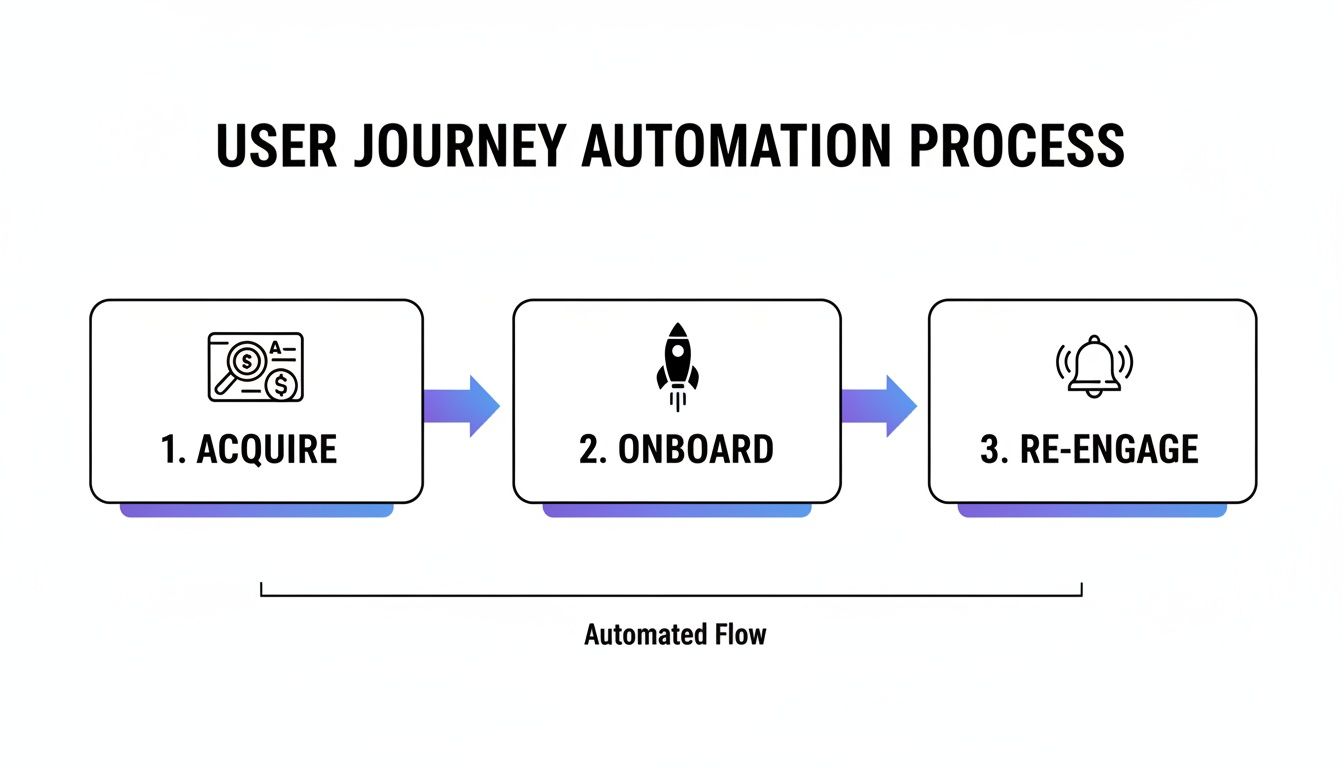
A good platform helps you orchestrate communication across these stages, making the entire experience feel seamless to the user.
Key Decision Criteria for Your App
As you start doing demos and comparing options, keep these four core areas in mind. They’ll help you cut through the marketing fluff and find a tool that actually works for your app.
- Integration Capabilities Your automation platform can't live on an island. It has to play nicely with the rest of your tech stack. Think about your analytics platform (like Amplitude), your attribution provider (like AppsFlyer), and your CDP (like Segment). If the integrations are clunky or the APIs are poorly documented, walk away. It's a non-starter.
- Scalability and Performance A tool that works great for 10,000 users might completely fall apart at one million. You need to ask the hard questions. How does the platform handle massive event volumes? Are there delays in sending messages at scale? Look for case studies from apps that have grown on their platform; it's the best proof you'll get.
- Pricing Models Pricing can be a minefield, so read the fine print. Most platforms charge based on Monthly Active Users (MAUs), the number of data points you track, or messages sent. For an early-stage app, an MAU-based model is usually the most predictable and budget-friendly.
- Customer Support Trust me, things will break, probably at the worst possible time. When they do, you need support that's responsive and helpful. Check what kind of support they offer. Is it just a generic email queue, or do you get a dedicated account manager? Look up reviews on sites like G2 to see what real customers are saying about their support experience.
Making an informed choice here prevents a painful and expensive migration down the road. The platform that feels right today should also have a clear path to support your biggest ambitions for tomorrow.
The numbers back this up. The global marketing automation market was valued at 6.65 billion** and is expected to rocket to **15.58 billion by 2030. That's a 15.3% compound annual growth rate. This isn't just a passing fad; it's a fundamental shift in how marketing gets done, with 79% of marketers already automating their customer journeys.
Ultimately, your automation platform is one of the most critical customer experience management tools you'll invest in. It directly shapes how users feel about your app every single day.
Measuring Success and Optimizing Your Strategy

Getting your automated workflows live is a fantastic milestone. Pop the champagne. But don't think for a second that the job is done. The real work, and the real growth, starts now.
The best mobile app marketing automation programs aren't set-it-and-forget-it. They’re living, breathing systems that you constantly have to feed with data and refine. This is where you move from just running campaigns to systematically making them better. It's the difference between a good automation setup and a great one that actually drives your app's bottom line.
Defining Your Key Performance Indicators
You can't improve what you don't measure. It’s an old saying because it’s true. Before you can start tweaking anything, you need to know what success looks like for each specific workflow. These key performance indicators (KPIs) are your north stars.
Every workflow should have a primary KPI that ties directly back to a business goal. Please, don't get sidetracked by vanity metrics like open rates. They feel good, but they don't pay the bills. Focus on numbers that reflect actual user behavior and revenue.
Here are a few examples of KPIs I've seen work well for core workflows:
- Onboarding Flow: The only thing that matters here is the activation rate. What percentage of new users actually complete that critical first action you need them to? Think creating their first project or logging their first workout.
- Re-engagement Campaign: Look at the 7-day reactivation rate. Of the sleepy users you poked, how many came back to the app within a week? That's your acid test.
- Win-Back Program: The goal is simple: stop the bleeding. The KPI should be just as simple: the churn reduction percentage you can directly attribute to this campaign.
By zeroing in on these action-oriented metrics, you create a direct line between your marketing efforts and tangible business outcomes. You're optimizing for real engagement, not just superficial clicks.
This focus on keeping users around isn't just a hunch; it's where the industry is heading. Global app marketing spend recently hit a staggering 109 billion**, and a huge chunk of that, **31 billion, was dedicated to remarketing. Smart marketers know that it's far more efficient to keep a user than to find a new one. You can dig into more data on app marketing budgets to see how this trend is reshaping strategies.
The Power of A/B Testing
Once your KPIs are locked in, A/B testing becomes your best friend. This is where you put on your lab coat and apply the scientific method to your marketing. By testing one variable at a time, you can figure out what actually works for your audience and make incremental gains that add up over time.
The key is discipline. Resist the urge to change the headline, the image, and the CTA all at once. If you do that, you'll have no idea what actually moved the needle. One change, one test. That's how you get clean data.
What Should You Be Testing
Honestly, you can test just about anything. But you need to start with the changes most likely to have the biggest impact.
Here are a few high-impact elements I always recommend starting with:
- Message Copy: This is the big one. Try a direct CTA like "Shop Now" versus a softer one like "See What's New." Test different tones. Are your users more receptive to a playful voice or a more straightforward one?
- Timing and Cadence: When you send a message can be just as important as what it says. Does a push notification sent at 7 PM on a Tuesday crush one sent at noon on a Friday? Is a sequence of three reminders better than five? Test it.
- Channel Selection: Don't assume push is always the answer. For a high-value win-back offer, a well-crafted email might feel more personal and perform significantly better.
- Personalization: See what happens when you add the user's first name. What if you reference an item they left in their cart or a category they browsed? Small touches can make a huge difference.
When you get into a rhythm of constantly running these tests and folding the learnings back into your workflows, you create a powerful flywheel. Each win builds on the last, leading to compounding improvements that can fundamentally change your app's growth trajectory.
Your App Marketing Automation Questions, Answered
As you start mapping out your mobile app marketing automation, a few questions always seem to pop up. Every founder and growth team I've worked with has wrestled with the same practical challenges and strategic roadblocks. Let's walk through some of the most common ones.
Nailing these fundamentals will help you sidestep common mistakes and build a strategy that actually moves the needle from the get-go.
How Soon Is Too Soon For A New App To Use Automation?
My advice? Start thinking about it the second you have a clear picture of your initial user journey. A brand-new app with a handful of users doesn't need a massive, expensive platform, but what it does need from day one is solid analytics and event tracking. That data is the raw material for every automated workflow you'll ever build.
A simple automated welcome series for new sign-ups is the perfect place to start. It’s a low-effort way to guarantee every user gets a consistent, welcoming first experience. Once you hit product-market fit and your user base starts growing predictably, you can begin layering in more sophisticated campaigns for re-engagement and segmentation.
The trick is to start small. Let your automation strategy grow in complexity right alongside your user base. Don't build a giant, complicated system before you have the traffic to justify it.
What Are The Biggest Mistakes I Need To Avoid?
The most common trap I see teams fall into is over-communicating. Blasting users with push notifications is the quickest path to an uninstall. Seriously. Always start with a conservative frequency and lean on A/B testing to figure out what timing and cadence your audience actually responds to.
Another huge pitfall is lazy segmentation. Sending the same generic message to every single user is just broadcasting noise, and it feels like spam. The entire power of mobile app marketing automation comes from smart segmentation based on what users actually do in your app and where they are in their lifecycle. Personalization is the name of the game.
Finally, don't set up a single workflow without a clear goal. Every automated campaign needs a specific, measurable objective tied to it. Maybe it’s boosting the trial-to-paid conversion rate by 15% or increasing Day 7 retention. You have to track performance against that goal to know if your efforts are paying off.
Can Automation Actually Help With My App Store Optimization?
This is a great question. While automation can't directly go in and tweak your app store listing, it has a massive indirect impact on your App Store Optimization (ASO). Some of the heaviest-weighted ranking factors on both the Apple App Store and Google Play are user engagement, session length, and long-term retention. These are all metrics that a good automation strategy directly improves.
Here’s how that connection works:
- Better Engagement Signals: Smart onboarding and re-engagement campaigns keep users coming back and interacting with your app. This sends a powerful signal to the app store algorithms that people find your app valuable.
- Generating Positive Reviews: You can get strategic with automation here. Set up a trigger to ask for a rating or review only after a user has completed a key positive action, say, their third successful checkout or completing level 10. This targets your happiest, most engaged users.
- Improved Conversion Rates: A steady flow of recent, positive reviews is one of the most powerful forms of social proof on your app store page. It convinces more people browsing your listing to hit that "Download" button.
Simply put, a well-oiled automation strategy makes your app stickier and your users happier. This creates a positive feedback loop that helps boost your organic visibility and downloads over the long haul.
Ready to build the automation engine that drives repeatable growth for your app? Adworkly combines expert human strategy with powerful AI agents to design and execute user acquisition and retention systems that get you on autopilot. Learn how we can lower your CPA and compound your organic growth. Get in touch with Adworkly today!