
 UGC Infra
What Is a UGC Creator? Your Guide to Authentic Brand Content
Discover what is a UGC creator and how they can help build trust and grow your brand with genuine user-generated content. Learn more now!
A UGC creator is a person who creates content featuring a brand or product for a fee. Brands then use this authentic content in their marketing channels.
Unlike traditional influencers, a UGC creator's value is not in their follower count. Their value is in the raw, relatable authenticity of the content they produce.
The Role of a UGC Creator
A UGC creator's job is to make content that looks like it came from a happy customer. Think of a spontaneous-looking unboxing video on TikTok or a product review on an Instagram Story. Their goal is to produce a library of assets for a brand to use in its marketing. Brands can use these assets in social media ads, website banners, or email newsletters.
The difference comes down to purpose and distribution. An influencer receives payment to promote a product to their audience. A UGC creator receives payment to create content for the brand to use on its own channels. This is a subtle but critical distinction.
It's All About Authenticity, Not Audience Size
The value of a UGC creator has nothing to do with their reach. It is about their ability to create content that builds immediate trust. Today's consumers can spot a polished, corporate ad and are often skeptical. They want genuine recommendations that feel like a tip from a friend, not a sales pitch.
This infographic breaks down a UGC creator's role. It shows how the role is built on authenticity, the types of content they create, and how it connects with audiences on different platforms.
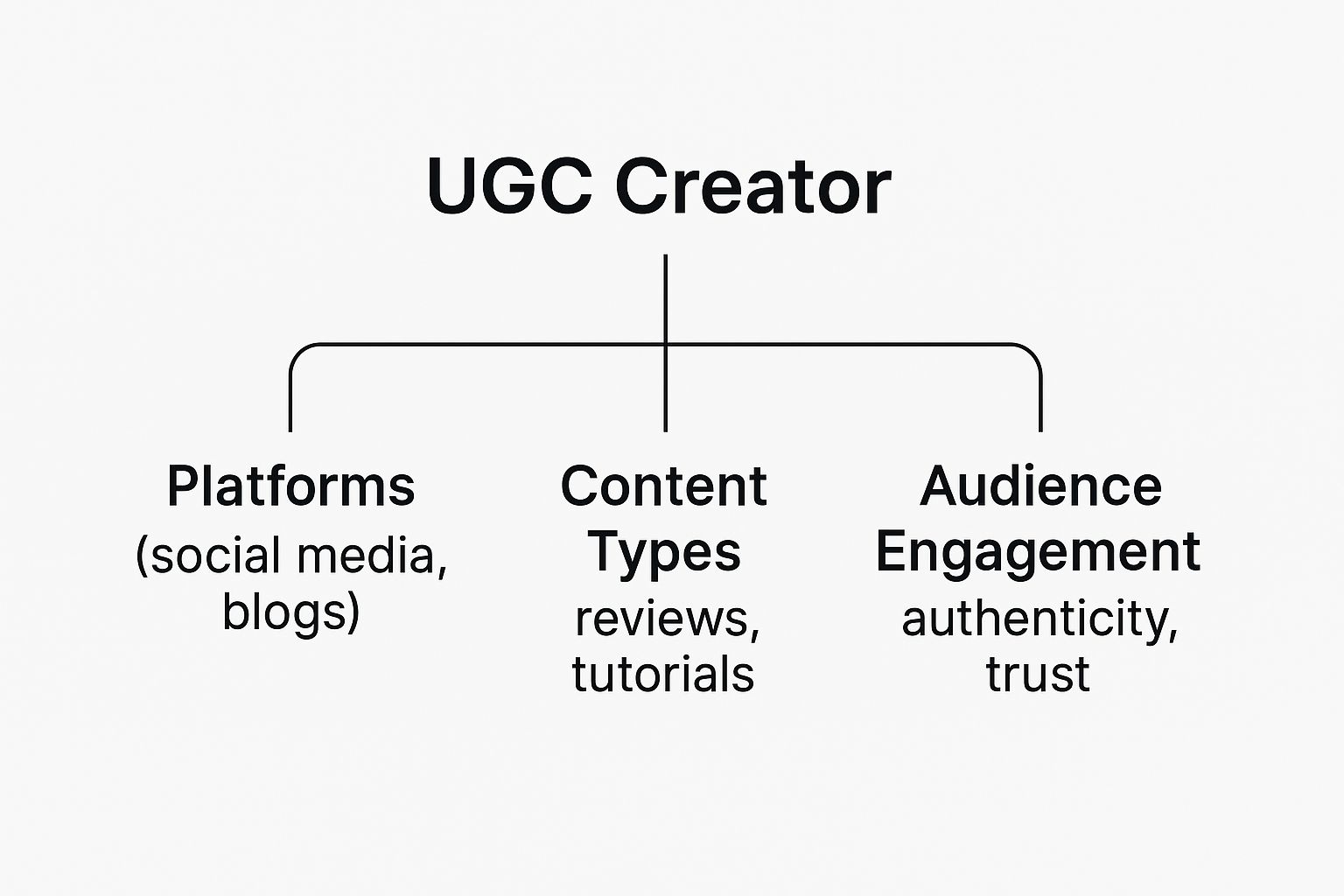
As you can see, trust is the central pillar. It connects the creator's content to the audience, making their work a valuable tool for building social proof.
UGC Creator vs. Traditional Influencer
To understand the unique role of a UGC creator, it helps to compare them against a traditional influencer. While some overlap exists, their core functions and value are different.
This table makes it clear. You hire a UGC creator for their content creation skills and an influencer for their distribution power.
UGC vs. Branded Content
It is also important to distinguish UGC from other marketing assets. Both are used to talk about a product. Their origins and overall feeling are different.
A UGC creator’s work provides social proof that is nearly impossible to replicate with in-house production. Their content acts as a real-time testimonial. It shows potential customers how real people use and love a product.
This approach bridges the gap between a brand's official message and the consumer's need for trust. Even though the creator receives compensation, the style remains genuine and unscripted.
To get a better feel for the broader world of brand-sponsored posts, you can learn more about what is branded content in our guide. Understanding these distinctions helps you see where UGC fits into a marketing strategy.
Why Authenticity Drives Modern Marketing

Today’s audiences are over hyper-polished, big-budget corporate ads. They have developed an instinct to skip them. What they do pay attention to are genuine recommendations from people they trust.
This shift in consumer behavior is why user-generated content has become so effective in marketing. A UGC creator makes content that looks like something a friend would post. It is personal, relatable, and does not seem like a sales attempt.
This authenticity bridges the trust gap that traditional advertising created. When a potential customer sees someone like them using and loving a product, it feels more believable. The message lands as a helpful tip, not a sales pitch.
The Value of Peer Recommendations
Think about how you make decisions. Are you more likely to try a new coffee shop because you saw a billboard or because a friend recommended it? You would likely choose the friend's recommendation. A UGC creator’s content is the digital version of that trusted friend's recommendation.
This type of peer-to-peer influence is a driver for consumers. It is all about social proof. Social proof is the psychological nudge we get when we see other people doing something, which makes us feel it is the right choice. Seeing others enjoy a product gives new customers the confidence to purchase.
This is especially true for younger generations. Millennials and Gen Z place a high value on authenticity. They are far more likely to trust their peers over a branded ad campaign.
A UGC creator's greatest asset is their ability to produce content that feels completely real. This authenticity is what makes their work so valuable for brands that want to build genuine, trust-based relationships with their customers.
Why Brands Are Embracing UGC
The move toward more authentic content is not a fleeting trend. It is a fundamental change in how brands must connect with people now. Businesses understand that building trust is as important as showing off a product’s features.
The proof is in the numbers. 86% of companies worldwide have already integrated user-generated content into their marketing. Why? Because it works. UGC campaigns outperform branded content for 93% of marketers. 79% of consumers say UGC plays a role in their buying decisions. You can read the complete findings in this research on user-generated content statistics from Amra & Elma.
This data shows what a UGC creator does is much more than making videos. They are tapping into the psychology of trust and social proof. This makes their content an indispensable tool for any modern marketing plan. By featuring content from real people, brands build an image that is more relatable, believable, and effective.
What Are the Business Benefits of Working with UGC Creators?

It is one thing to understand the value of authentic content in theory. It is another to see how it affects your business. Partnering with UGC creators delivers tangible benefits that directly impact your marketing performance and your bottom line.
Think beyond fresh content. We are talking about cost savings, better-performing ads, and a steady stream of marketing assets. These advantages are the building blocks of a more resilient and effective marketing engine.
Slash Your Content Production Costs
Professional photoshoots and video production can drain a marketing budget fast. You must pay for models, rent locations, buy or rent equipment, and hire a crew. A UGC creator cuts through that complexity. They create compelling content using the tools they already own, usually their smartphone.
This simple, direct approach makes content creation much more affordable. You pay a creator for their time, creativity, and the final assets. This is a fraction of what a traditional production would cost. High-quality, authentic content becomes accessible, even without a massive budget.
The proof is in the numbers. The User-Generated Content market grew by 69% in a single year, jumping from 4.5 billion to over 7.6 billion. With creators charging around $198 per piece of content on average, it is a cost-effective alternative to traditional influencer marketing. You can look at more of these UGC market statistics from Whop to see the trend for yourself.
Improve Conversion Rates with Social Proof
Nothing sells a product like seeing a real person enjoying it. That is the effect of social proof, and UGC is its most effective form. When potential customers see everyday people using your app or product, it builds instant trust. It also validates their decision to try it. The direct result is higher conversion rates.
This is why ads featuring UGC so often outperform glossy, studio-produced creative. They do not feel like a sales pitch from a faceless company. They feel like a genuine recommendation from a friend. That relatability stops the scroll and convinces people to take the next step.
By showing your product in a real-world context, UGC helps potential buyers picture themselves using it. This personal connection breaks down hesitation and gives them the final nudge they need to click "download" or "buy now."
Build a Scalable and Diverse Content Library
Relying on a single agency or an in-house team can sometimes lead to stale creative. The same ideas and styles get recycled. Working with a diverse group of UGC creators solves that problem. It opens up a constant flow of fresh, varied assets for all your campaigns.
Each creator brings their own style, voice, and perspective. This variety is a marketer's dream. It allows you to:
- Test many different creative angles to find what connects with your audience.
- Customize content for specific platforms, like a 15-second TikTok or a website testimonial.
- Avoid creative fatigue by always having something new to put in front of your audience.
This approach gives you a scalable way to produce a high volume of content without sacrificing quality. You will soon have a robust library of authentic assets ready to deploy across all your marketing channels. This keeps your brand’s message engaging and fresh.
How to Find and Vet the Right Creators
Getting your UGC campaign right starts with finding the perfect creator. You are not looking for someone with a camera. You are looking for a partner whose personal style aligns with your brand and who can genuinely connect with your target audience. It comes down to knowing where to look and what to look for.
The first part of the process is sourcing, or finding these talented people. There are a few places where you can build a list of potential collaborators who can achieve the authentic feel you want.
Where to Look for Creators
There are two main paths you can take to find a great UGC creator. You can use a platform built for this purpose, or you can do some direct searching on social media. Both methods work well.
- Creator Marketplaces: These are matchmaking sites for brands and creators. They make the process easier by letting you filter people by niche, content style, and rates. This helps you find a good fit without endless scrolling.
- Social Media Searches: You can also search directly on platforms like TikTok and Instagram. Try searching for hashtags relevant to your app, like #techreview or #appdemo. This is a good way to find people who are already passionate and knowledgeable about your industry.
If you want to go deeper on sourcing talent, our guide on UGC creator jobs has more strategies for finding and connecting with skilled creators.
Vetting Potential Partners
Once you have a shortlist, it is time to do your homework. Vetting creators is an important step to make sure their quality and style are a match before you sign an agreement. It involves more than a quick glance at their profile.
Start by looking at their portfolio. Pay close attention to video quality, editing style, and how they appear on camera. Does their content feel real and engaging? You are looking for a creator whose natural voice and aesthetic feel like an extension of your own brand.
A creator’s past work is the best indicator of their future performance. Look for consistency in quality and a genuine ability to connect with an audience. Their portfolio should show they understand how to create content that feels real, not like a polished advertisement.
After you have checked out their work, get a feel for their professionalism. A great creator is a great communicator. They meet deadlines and they know how to work collaboratively with a brand. A short introductory call can tell you a lot about their working style and whether they are reliable.
Creating an Effective Brief
A clear, well-structured creative brief is the foundation of any successful partnership. It is your chance to set expectations and give the creator all the direction they need. It should still leave them enough space to be creative. A good brief prevents misunderstandings and helps you get the exact content you wanted.
Your brief should always include these key elements:
- Campaign Goals: What is the purpose of this content? Are you trying to drive app downloads or increase engagement?
- Key Messaging: What are the one to two main things you need the creator to say about your product?
- Visual Guidelines: Are there any specific shots you need? Are there any brand colors or styles they should use or avoid?
- Call to Action: What specific action do you want people to take after watching the video?
The biggest mistake you can make is writing a word-for-word script. The point of UGC is its authenticity, which comes from letting creators use their own voice. Give them clear guidelines and key messages, but do not hand them a restrictive script. That balance produces content that is both on-brand and genuinely relatable.
Analyzing Successful UGC Creator Campaigns
Theory is helpful, but seeing it in action makes things clear. Let's break down a few real-world examples of user-generated content campaigns to see what works and why. By looking at how brands in e-commerce, software, and consumer goods have succeeded, we can spot the patterns of a winning strategy.
For each of these case studies, we will examine the content a creator made and how the brand used it. This is not about admiring videos. It is about dissecting what made them successful. Was it the relatable style? A clear call to action? Think of these as a blueprint for your own UGC efforts.
Case Study: E-commerce Fashion
An online clothing brand wanted to launch its new sustainable activewear line. Instead of spending their budget on a polished studio photoshoot, they partnered with a handful of creators. The goal was to show the clothes in real-life situations.
Creators filmed short videos of themselves wearing the activewear during their daily routines, like walking the dog, getting coffee, or running errands. The result was content that felt completely authentic and relatable. The brand then used these videos in their social media ads and on product pages. This showed potential customers how the clothes looked and moved in a real-world context. This simple shift built trust and improved their ad click-through rates.
Case Study: Software and Apps
A productivity app company faced a common challenge: how to show people their tool helps them get organized. Their solution was to find creators who were already their ideal customers, like freelance project managers and small business owners.
These creators were not actors; they were genuine users. They created simple screen-recording tutorials showing exactly how they used the app to manage their day-to-day tasks. Because the creators were credible experts, their enthusiasm for the app came across as a trustworthy testimonial. The brand showcased these videos on its website, turning skeptical visitors into confident new users. If you are wondering how to measure the impact of videos like these on specific platforms, you can check out our guide on TikTok creator analytics.
A successful UGC campaign often highlights a specific use case that resonates with a target audience. It moves beyond showing a product to demonstrating its value in a real-life scenario.
The momentum behind UGC marketing is clear. The market is projected to grow from 6.7 billion to 132.73 billion by 2034. North America currently leads the charge, holding a 36.6% market share and generating $2.4 billion in revenue. This is largely due to high smartphone and social media adoption. You can find more data on the user-generated content marketing market on Market.us. These examples show you how to tap into this growth.
Frequently Asked Questions About UGC

Starting with UGC naturally brings up a few questions. Understanding the common ones from the start is the best way to build a successful program. Let’s clear up some of the most frequent questions so you can move forward with confidence.
How Much Does Hiring a UGC Creator Cost?
The price for a UGC creator can vary. It depends on their experience, the scope of your project, and the kind of content you need. A good starting range is between 100 and 300 for a single video or a small set of photos.
Creators with a history of great results or a unique skill set might ask for more. You can often get more value by arranging content bundles or setting up a longer-term partnership for a steady stream of creative. Remember, you are paying for the content and the right to use it, not for a shoutout to their personal followers.
When you look at it this way, it is clear that working with UGC creators is a cost-effective move compared to traditional video shoots or big-budget influencers.
Who Owns the Rights to the Created Content?
This is an important question. You need to sort out content ownership and usage rights in a written agreement before any work begins. Finalizing this is crucial for avoiding legal issues or confusion later. Typically, your brand pays for a license to use the content, not for outright ownership.
Your contract should be clear on a few key points:
- Where can you use it? Be specific about the channels, like social media ads, your website, or your email newsletters.
- How long can you use it? Define the licensing period. Is it for a few months, a full year, or forever (in perpetuity)?
- Can you edit the content? Clarify whether you have the right to make changes, like adding text overlays or cutting a video for different formats.
A formal contract is your best friend here. It ensures you and the creator are on the same page and gives you the legal permission to use the content in your marketing campaigns.
How Do You Measure UGC Campaign ROI?
Figuring out the return on investment (ROI) for your UGC campaigns always starts with your goals. The metrics you watch will look different if you are aiming for conversions versus building brand awareness.
If your main goal is to drive sales or app downloads, you need to track the numbers that tie directly to your bottom line. Compare these results against your non-UGC ads to see the difference the content is making.
To get a clear picture of your ROI, focus on these metrics:
- Conversion Rate: What percentage of users who see a UGC ad take the action you want, like making a purchase?
- Click-Through Rate (CTR): This shows how many people clicked on your UGC ad. A high CTR is a strong signal that the creative is effective.
- Cost Per Acquisition (CPA): How much are you spending to get a new customer through your UGC ads? This is a key measure of financial efficiency.
If your goal is brand awareness, you will want to look at engagement metrics like likes, comments, and shares. A good tip is to give each creator a unique discount code or a trackable link. This lets you attribute sales directly to their content. It also gives you insight into what connects with your audience.
Ready to grow your app with authentic content that users connect with? At Adworkly, we specialize in building and scaling UGC campaigns that deliver real results. We can help you find the perfect creators and turn their content into conversions. Visit Adworkly to get started.