8 Unforgettable Marketing Campaign Examples and Analysis (2025)
Explore a deep analysis of each marketing campaigns example from Nike, Apple, and more. Learn replicable strategies to grow your business and app.
Studying a successful marketing campaign example is one of the best ways to learn. Many breakdowns offer only surface-level praise. They celebrate a campaign's success without explaining the specific strategies and tactical decisions that produced the results. This leaves you with inspiration but no clear path to apply those lessons to your own work. This article is different. We will move beyond simple descriptions to provide a deep strategic analysis of eight iconic campaigns.
You will see exactly how brands like Nike, Apple, and Spotify built their legendary marketing initiatives. We will dissect the "why" behind their creative choices, channel selection, and messaging. Each analysis gives you replicable methods and actionable takeaways. We will examine the data, the psychological triggers, and the execution details that made these campaigns so effective.
This is not a list of generic success stories. It is a practical guide for digital marketers, app founders, and SaaS businesses looking for proven growth strategies. By breaking down each marketing campaign example, we will uncover the core principles you can use to build your next campaign. We will explore user-generated content, personalization, brand positioning, and viral marketing. Prepare to learn how these brands achieved massive scale, built lasting customer loyalty, and created cultural moments that defined their industries. You will leave with a clear understanding of the mechanics behind great marketing and concrete ideas to implement immediately.
1. Nike's "Just Do It" Campaign
The Nike "Just Do It" campaign is a prime marketing campaign example because it shifted focus from product features to a universal human emotion: determination. The Wieden+Kennedy agency launched the slogan in 1988. It transformed Nike from a niche brand for elite runners into a global symbol of athletic aspiration. The campaign’s core strategy was to associate the brand with the internal struggle and ultimate triumph of every athlete, regardless of skill level.
Instead of highlighting shoe technology, Nike told stories. These stories created a deep emotional connection with consumers. This made the brand synonymous with the courage to try. The message was simple, actionable, and inspiring.
Strategic Breakdown and Impact
Nike’s strategy was to own the concept of athletic achievement. The company executed this through partnerships and bold creative choices that reinforced the "Just Do It" mindset.
- Iconic Partnerships: The collaboration with Michael Jordan elevated both the brand and the athlete into global icons. It showed how aligning with a figure who embodies the brand’s ethos creates a lasting association.
- Cultural Relevance: The 2018 "Dream Crazy" ad featuring Colin Kaepernick showed Nike’s willingness to engage in cultural conversations. Though controversial, it reinforced its brand values of bravery and conviction. This resonated deeply with its target audience and generated massive earned media.
- Inclusive Storytelling: Campaigns featuring female athletes and Paralympic athletes broadened the definition of "athlete." This inclusive approach made the "Just Do It" message feel accessible and relevant to a much wider audience.
The following infographic visualizes the campaign's massive commercial success during its initial decade.
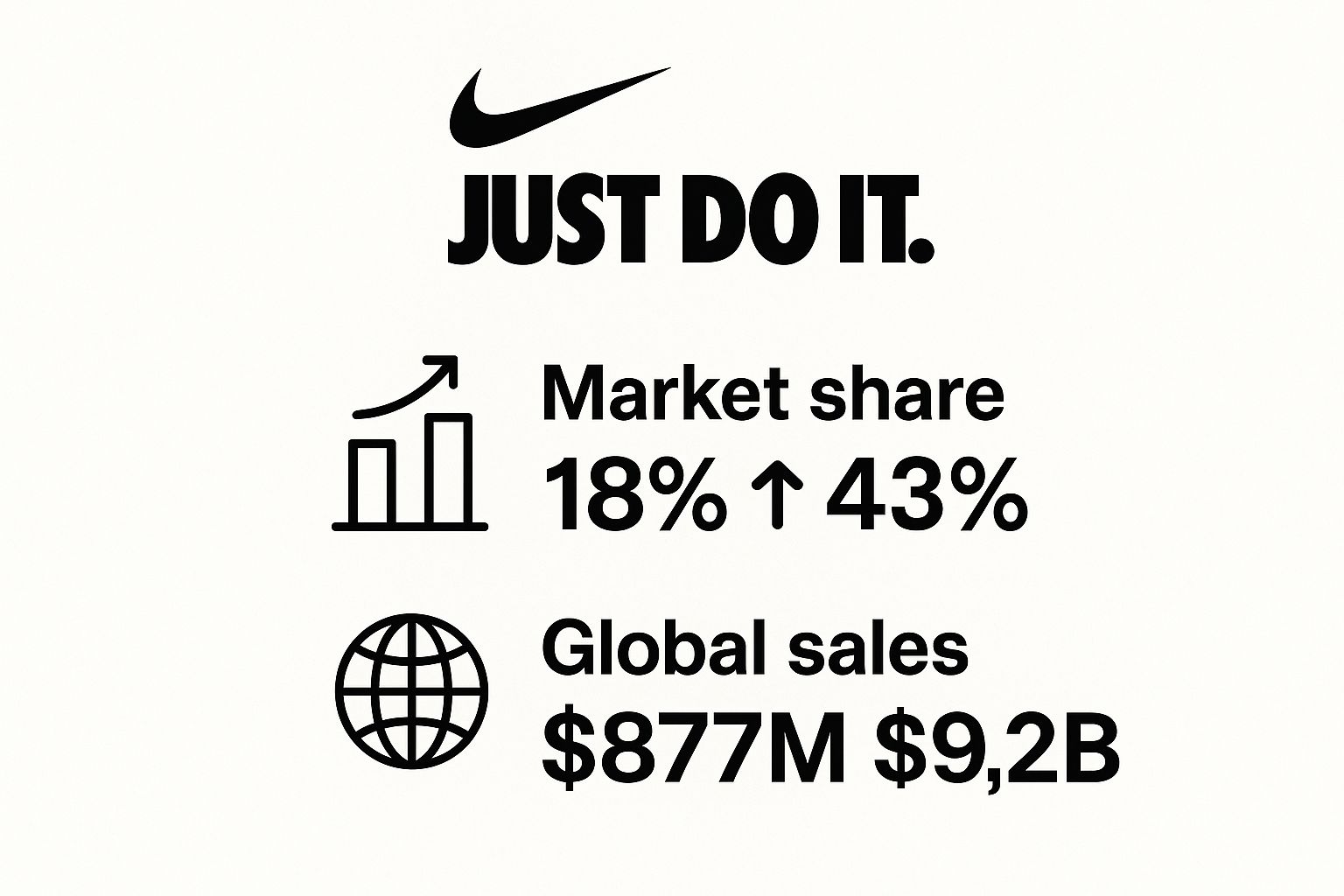
These numbers show how effectively the campaign translated brand identity into market dominance and revenue growth.
Actionable Takeaways for Your Brand
You can apply the principles behind Nike's success to your own marketing efforts. Focus on building an emotional connection that goes beyond your product's specifications.
- Focus on Customer Values: Identify the core values and aspirations of your audience. Build your messaging around those emotions instead of product features.
- Use Authentic Stories: Feature real people and genuine stories to build credibility and make your message relatable.
- Maintain Consistency: Ensure your core message is consistent across all marketing channels, from social media to major ad campaigns. This builds a strong, recognizable brand identity.
2. Dove's "Real Beauty" Campaign
Dove's "Real Beauty" campaign is a significant marketing campaign example because it pivoted from product-centric advertising to a purpose-driven social mission. The campaign launched in 2004. It challenged conventional beauty standards by featuring everyday women of various shapes, sizes, and ethnicities instead of professional models. The strategy was to build brand loyalty by addressing a real social issue: the narrow and unrealistic portrayal of beauty in media.

This approach fostered a global conversation. It positioned Dove as a brand that cared about its customers' well-being. It created an authentic emotional bond that transcended the simple act of buying soap.
Strategic Breakdown and Impact
Dove’s strategy was to own the conversation around self-esteem and authentic beauty. The company executed this through thought-provoking content and a long-term commitment to the campaign’s core message.
- Viral Video Content: The 2013 "Real Beauty Sketches" video became one of the most-watched ad videos ever. It showed the gap between how women see themselves and how others see them. This created a highly shareable and emotional piece of content.
- Authentic Representation: By using real women in billboards and print ads, Dove directly challenged the industry norm. This move resonated deeply with consumers who felt unrepresented by traditional advertising. It built trust and relatability.
- Encouraging User Dialogue: The campaign actively encouraged women to share their own stories and perspectives on beauty. This created a strong sense of community and generated organic, user-driven content. The use of real stories is a core part of what makes user-generated content so effective, a topic you can explore in more detail.
The campaign successfully transformed Dove's brand perception from a simple personal care provider to a cultural advocate for self-esteem. It drove both sales and brand loyalty.
Actionable Takeaways for Your Brand
You can apply the principles of Dove's campaign to create a more meaningful connection with your audience. Focus on aligning your brand with a purpose that your customers genuinely care about.
- Address a Real Customer Problem: Look beyond your product's function. Identify a deeper emotional or social issue your audience faces. Build your campaign around offering a solution or perspective.
- Commit to Authenticity: Feature real customers and their stories in your marketing. Authenticity builds trust far more effectively than polished, aspirational advertising.
- Create Shareable, Emotional Content: Develop content that sparks conversation and is emotionally resonant. People are more likely to share content that makes them feel something.
- Be Consistent and Long-Term: A purpose-driven campaign is not a one-off effort. Integrate your core message across all marketing channels and commit to it for the long run to build credibility.
3. Apple's "Get a Mac" Campaign
The Apple "Get a Mac" campaign is a masterclass marketing campaign example because it simplified a complex purchase decision through clever personification and direct comparison. The campaign ran from 2006 to 2009. It featured actors Justin Long as the cool, creative "Mac" and John Hodgman as the formal, flustered "PC." This strategy effectively translated technical specifications into relatable personality traits.
Instead of focusing on processor speeds or memory, Apple highlighted user experience. The commercials used humor to contrast Mac’s ease of use, security, and creative capabilities against the perceived frustrations of using a Windows PC. This approach made the brand’s advantages clear to a mainstream audience without technical jargon.
Strategic Breakdown and Impact
Apple's strategy was to personify the user experience and create a clear, memorable brand distinction. The campaign was executed through a series of short, witty television spots that consistently reinforced a single core message in different scenarios.
- Personification as a Differentiator: By giving Mac and PC human forms, Apple created an immediate emotional connection. The "Mac" character embodied the brand’s desired image: innovative, relaxed, and creative. The "PC" character represented everything Apple was not: corporate, prone to problems, and complicated.
- Simple, Repetitive Format: Each commercial followed the same simple format. The characters stood on a plain white background, stated their identity ("Hello, I'm a Mac." "And I'm a PC."), and acted out a short scenario. This consistency made the ads instantly recognizable and the core message easy to absorb.
- Focus on Pain Points: Commercials like "Viruses" and "Restarting" directly addressed common consumer frustrations with Windows PCs. This tactic validated viewers' experiences and positioned the Mac as the clear solution to those specific problems. It turned a competitor's weakness into a key selling point.
The campaign was a massive success. It contributed to a 42% market share growth for Apple during its run. It successfully shifted public perception and convinced a generation of consumers to switch.
Actionable Takeaways for Your Brand
You can adapt the core principles of the "Get a Mac" campaign to highlight your own brand's competitive advantages in a compelling way.
- Personify Your Brand: Think about what human characteristics your brand would have. Use storytelling and messaging to bring that personality to life, making your brand more relatable than competitors.
- Simplify Your Message: Identify the one or two most important differentiators between you and your competition. Build your campaign around making those points incredibly simple and memorable.
- Address Customer Pain Points Directly: Understand the frustrations your target audience has with existing solutions. Show them clearly and directly how your product solves those specific problems better than anyone else.
4. Old Spice's "The Man Your Man Could Smell Like" Campaign
The Old Spice "The Man Your Man Could Smell Like" campaign is a masterclass in brand reinvention. Wieden+Kennedy launched it in 2010. It transformed Old Spice from an outdated product for older men into a viral sensation. The campaign’s strategy was to use absurdist humor and a charismatic spokesperson to appeal to a younger demographic and to the women who often purchased male grooming products.

Instead of focusing on product ingredients, Old Spice created a personality. The campaign, starring Isaiah Mustafa, used fast-paced, surreal humor to create memorable and highly shareable content. This approach built a new, modern identity for the brand. It directly targeted couples and redefined real-time marketing.
Strategic Breakdown and Impact
Old Spice's strategy was to win over a new generation by becoming a part of internet culture. The company executed this through clever creative, direct audience engagement, and a deep understanding of social media dynamics.
- Targeting the Decision-Maker: The campaign directly addressed women ("Hello, ladies"). This acknowledged them as the primary purchasers. This smart positioning allowed the brand to speak to its buyers while entertaining its end-users.
- Real-Time Social Engagement: The campaign created 186 personalized YouTube video responses to fans and celebrities over two days. This tactic generated massive organic reach. It made the audience feel seen and valued.
- Viral-Optimized Content: The original commercial was designed for virality with its single-take style, witty script, and unexpected twists. The content was inherently shareable. It led to millions of views and countless parodies.
The initial Super Bowl ad and subsequent social media blitz created an immediate cultural moment, as seen in the video below.
The campaign’s success was not measured in views alone. It directly led to a significant increase in sales. It proved the commercial power of creative, targeted humor. This effort shows a clear connection between a strong brand personality and business growth, serving as an ideal marketing campaign example.
Actionable Takeaways for Your Brand
You can apply the core principles of Old Spice’s success to revitalize your brand and engage a modern audience. Focus on understanding who your true buyer is and create content that entertains them.
- Identify the Real Buyer: Look beyond your end-user. Determine who makes the purchasing decision and tailor your messaging to their motivations and sense of humor.
- Embrace Audience Interaction: Use social media for genuine, two-way conversations. Respond to comments and create content that directly involves your community to build loyalty. You can find more information about working with online personalities in our guide to influencer marketing campaigns.
- Take Creative Risks: Do not be afraid to break from your brand’s historical tone if it no longer connects with your target audience. A bold, creative shift can capture new attention and redefine your market position.
5. ALS Ice Bucket Challenge
The ALS Ice Bucket Challenge is a marketing campaign example that shows the force of user-generated content and organic virality. This movement originated in the summer of 2014. It was not a corporate campaign but a grassroots effort that exploded on social media. It involved people dumping a bucket of ice water over their heads, posting the video, and nominating others to do the same or donate to the ALS Association. Its core strategy was a simple, shareable, and fun action tied to a serious cause.
This challenge transformed public awareness of amyotrophic lateral sclerosis (ALS). It created a global conversation by giving everyone an easy and visible way to participate. It turned social media feeds into a massive, decentralized fundraising and awareness engine.
Strategic Breakdown and Impact
The challenge's strategy was built on participation, social pressure, and a low barrier to entry. This was executed through a chain-reaction model that leveraged social networks to achieve unprecedented scale.
- Social Nomination Mechanism: The core mechanic of "challenging" others was the engine of its virality. This created a network effect where each participant pulled in several more. This led to exponential growth without any paid media spend.
- Influencer Amplification: When public figures like Bill Gates, Mark Zuckerberg, and Oprah Winfrey participated, they provided massive credibility and reach. Their involvement turned a social media trend into a global phenomenon. It encouraged millions more to join.
- Clear Call to Action: The challenge had two simple options: take the challenge or donate. This clarity made it easy for people to participate in a way they felt comfortable with. It funneled attention directly toward the ALS Association. The campaign raised over $115 million in just eight weeks.
The campaign's success was not planned in a boardroom. It was a perfect storm of a simple idea, a worthy cause, and the power of social networks. This organic growth is a key lesson for any brand.
Actionable Takeaways for Your Brand
You can apply the principles of the Ice Bucket Challenge to your own cause-related or user-generated content campaigns. Focus on creating a simple, repeatable action that people want to share.
- Create a Simple, Repeatable Action: Design a core activity that is easy for anyone to replicate and record. Simplicity removes friction and encourages participation.
- Build in a Sharing Mechanism: Explicitly ask participants to nominate or tag friends. This direct call to share is crucial for triggering viral growth.
- Connect to a Meaningful Purpose: A genuine connection to a cause inspires people to participate. Your campaign should have a clear, authentic purpose beyond marketing your product.
6. Spotify Wrapped
Spotify Wrapped is a masterful marketing campaign example because it transforms user data into a deeply personal and shareable annual event. The campaign launched in 2016. It gives users a data-driven summary of their listening habits. It turns dry statistics into compelling, visually appealing stories. The core strategy is to celebrate the user's individuality, making them the hero of their own musical journey.
Instead of traditional advertising, Spotify created a product-led tradition. This annual retrospective generates massive organic social media buzz. It reinforces the platform's value and fosters a strong sense of community and brand loyalty.
Strategic Breakdown and Impact
Spotify’s strategy was to own the end-of-year reflection period for music lovers. The company executed this by making data feel human, personal, and highly shareable. This created a flywheel of user-generated content.
- Hyper-Personalization at Scale: Wrapped presents individual listening data like top artists, songs, and genres in a fun, narrative format. Features like "Audio Aura" (2021) and "Listening Personality" (2022) added emotional and psychological layers. They made users feel uniquely understood.
- Engineered for Virality: The campaign's output is a series of colorful, mobile-first "story" slides designed for easy sharing on platforms like Instagram and Twitter. This design choice turns millions of users into brand ambassadors each year. It generates immense earned media.
- Dual-Sided Engagement: Spotify also provides a "Wrapped" experience for artists. It shows them data on how their music connected with listeners. This encourages artists to share their own results. It amplifies the campaign's reach and creates a virtuous cycle of engagement between creators and fans.
This approach creates a FOMO (fear of missing out) effect. Non-users see the social media flood and are incentivized to join Spotify to participate the following year.
Actionable Takeaways for Your Brand
You can apply the principles behind Spotify Wrapped to turn your own customer data into a marketing asset. Focus on celebrating your users and giving them a story worth sharing.
- Turn Data into a Narrative: Identify user data points that can be woven into a personal story. Present this information in a visually engaging and emotional way, not as a dry report.
- Design for Shareability: Create outputs that are optimized for social media. Use mobile-friendly formats, clear visuals, and concise text that encourage users to post their results.
- Create Anticipation: Establish a recurring event or tradition that your customers can look forward to. An annual recap, a milestone celebration, or a seasonal summary can build excitement and loyalty.
7. Airbnb's "Belong Anywhere" Campaign
Airbnb's "Belong Anywhere" campaign is a significant marketing campaign example because it shifted the company’s identity from a budget accommodation service to a platform for authentic human connection. The campaign launched in 2014. It moved beyond functional benefits like cost savings and instead focused on the emotional desire to belong. The strategy was to position Airbnb as a facilitator of genuine travel experiences. It connected people with local cultures and communities.
Instead of showcasing rooms, Airbnb began telling stories about connection. This narrative transformed the brand. It made the brand synonymous with experiencing a destination like a local, not just a tourist. The message was aspirational, emotional, and redefined the value of travel accommodations.
Strategic Breakdown and Impact
Airbnb’s strategy was to own the concept of authentic travel and belonging. The company achieved this through a comprehensive rebrand, community-focused storytelling, and a clear brand purpose that guided its marketing.
- Visual Identity Rebrand: The introduction of the "Bélo" symbol, created with DesignStudio, gave the abstract concept of belonging a tangible form. This symbol became a universally recognized icon for the brand’s mission. It represented people, places, and love.
- Community-Driven Storytelling: Campaigns like "Never a Stranger" and "Live There" used real stories from hosts and guests to highlight genuine connections. By putting its community at the center, Airbnb built authenticity and trust. It showed the unique experiences its platform enabled.
- Purpose-Led Messaging: The 2017 "We Accept" campaign was a direct response to social conversations around discrimination. It reinforced the company's core value of inclusivity. It resonated deeply with its target audience and generated widespread positive sentiment for taking a stand on an important social issue.
This purpose-driven approach successfully repositioned Airbnb. It established the brand as a community-centric platform dedicated to fostering a more open and connected world.
Actionable Takeaways for Your Brand
You can implement the core principles of Airbnb’s success to build a brand that connects with customers on an emotional level. Focus on the human value your product or service provides.
- Build Campaigns Around Emotional Benefits: Identify the core emotional need your product fulfills. Create messaging that speaks to that feeling, whether it is belonging, security, or achievement, instead of just listing features.
- Leverage Your Community as Storytellers: Your most passionate users are your best advocates. Feature their authentic stories, testimonials, and experiences in your marketing to build social proof and relatability.
- Align Brand Messaging with Your Mission: Ensure your marketing campaigns consistently reflect your company’s core values and mission. This creates a strong, authentic brand identity that consumers can trust and connect with.
8. Coca-Cola's "Share a Coke" Campaign
The Coca-Cola "Share a Coke" campaign is an outstanding marketing campaign example because it transformed a mass-produced product into a personal experience. The campaign initially launched in Australia in 2011. It replaced the iconic Coca-Cola logo on bottles with popular names. It created an immediate, personal connection with consumers. The core strategy was to foster sharing, both physically and digitally. This turned the product itself into a medium for connection.
Instead of a one-way broadcast message, Coca-Cola invited consumers to participate. People searched for their names, bought Cokes for friends and family, and shared their discoveries on social media. This created a wave of user-generated content that amplified the campaign's reach far beyond paid media.
Strategic Breakdown and Impact
Coca-Cola's strategy was to put individuals at the center of its brand story. The company achieved this by leveraging personalization at a massive scale and designing a product experience that was inherently shareable.
- Mass Personalization: By printing 150 of Australia's most popular names, the campaign made millions of people feel seen. The company later expanded this tactic globally. The U.S. version featured 250 names. It created a sense of scarcity and a "treasure hunt" dynamic that drove repeat purchases.
- Encouraging User-Generated Content: The simple act of finding a named bottle was a perfect moment for social media. This fueled a viral loop of photos and posts tagged with #ShareACoke. This generated enormous organic reach and turned customers into brand advocates.
- Cultural and Local Adaptation: The campaign was successfully adapted for different markets. In the UK, it included popular nicknames like 'BFF' and 'Bestie'. Holiday versions featured terms like 'Santa'. This flexibility allowed the core concept to resonate globally while feeling locally relevant.
The campaign effectively bridged the gap between the physical product and the digital world. It created tangible moments worth sharing online. To learn more about how brands achieve this synergy, you can explore other successful marketing campaigns.
Actionable Takeaways for Your Brand
You can apply the principles of personalization and participation to your own marketing. The goal is to make your audience feel like active participants, not just passive consumers.
- Create Shareable Moments: Design your product or campaign in a way that encourages people to share it. Think about what makes an experience memorable enough to post online.
- Leverage Personalization: Find ways to personalize your product or communications. Even small touches can create a strong emotional connection and make your brand stand out.
- Don't Fear Change: Coca-Cola temporarily altered its most iconic brand asset, its logo. Be willing to take calculated creative risks to make a significant impact and capture your audience's attention.
Top 8 Marketing Campaigns Comparison
Applying These Lessons to Your App's Growth
The campaigns we analyzed provide a clear framework for building marketing that connects with people. From Nike’s aspirational identity to Dove’s challenge of beauty standards, each successful marketing campaign example shows that the most effective strategies are built on a deep understanding of human values. These brands did not simply sell a product. They sold an idea, a community, or a feeling.
The core lesson is this: your marketing must resonate on an emotional level. Apple’s "Get a Mac" campaign succeeded by personifying technology and making the complex simple and relatable. Old Spice used unexpected humor to capture attention in a saturated market. Both campaigns understood their target audience and spoke to them directly. This created a memorable connection that transcended features and specifications.
Key Principles for Your Next Campaign
The examples in this article show several replicable principles that you can apply directly to your app's growth strategy.
- Foster Participation: The ALS Ice Bucket Challenge and Coca-Cola's "Share a Coke" campaign prove the power of user involvement. They turned passive consumers into active participants and brand advocates. Think about how your app can encourage users to create and share content related to your brand.
- Leverage Personalization: Spotify's Wrapped campaign is a masterclass in using data to create a personal, shareable experience. It transforms user data into a unique asset that strengthens the user's bond with the service. Consider what data your app collects and how you can package it into a meaningful, personalized story for your users.
- Build a Community: Airbnb’s "Belong Anywhere" campaign focused on the human connection of travel, not just the logistics of booking a room. This approach created a sense of community and shared values among its users. Your app can achieve this by defining a mission that goes beyond its functional purpose and unites your users around a common belief.
Turning Insights into Actionable Steps
Now it is time to apply these lessons. Start by identifying a core human insight that is relevant to your target audience. What are their aspirations, frustrations, or desires? Your next campaign should be built around this insight, not just your app's features.
Next, define the one key emotion you want your campaign to evoke. Do you want to inspire them like Nike, make them laugh like Old Spice, or make them feel understood like Dove? A single, focused emotional goal will make your creative execution stronger and more memorable.
Finally, think about how to make your users the heroes of the story. A great marketing campaign example often puts the customer at the center. Create opportunities for them to participate, share their experiences, and feel like they are part of something bigger. When you turn users into advocates, you build a sustainable engine for growth that is far more effective than any paid advertisement alone.
Are you ready to build a campaign that gets results? Adworkly specializes in turning these strategic insights into high-performance user acquisition campaigns for apps like yours. Let our team of experts help you design, launch, and optimize a campaign that drives measurable growth. Visit Adworkly to learn how we can help you build your next success story.