
 UGC Infra
10 Brilliant Influencer Marketing Example Campaigns to Steal in 2026
Discover our top influencer marketing example list. Learn from 10 case studies with actionable strategies for mobile apps and brands to replicate now.
Influencer marketing has evolved far beyond simple sponsored posts. It is now a sophisticated channel for driving measurable growth, especially for mobile apps and consumer brands. The core challenge for founders is no longer just finding creators. The real task is building scalable, repeatable systems that convert authentic content into predictable user acquisition and revenue. Many see the potential but struggle to move from abstract theory to concrete execution, often getting lost in the noise of vanity metrics and one-off campaigns.
This article cuts through that confusion. We will deconstruct 10 specific, high-impact influencer marketing examples, detailing the exact strategies, creative briefs, distribution models, and performance metrics behind their success. You will see how brands like Glossier, TikTok, and Bumble built powerful creator ecosystems that became foundational to their growth. This is not a collection of generic success stories; it is a tactical playbook designed for action. To truly understand what fuels successful campaigns and maximize your brand's impact, exploring key influencer marketing best practices is essential.
Our goal is to give you a clear, replicable framework. For each case study, you will get:
- A strategic breakdown of the campaign's core objectives.
- Actionable takeaways you can apply immediately.
- Step-by-step templates to help structure your own creator programs.
By the end, you will have a comprehensive understanding of how to build, manage, and scale an influencer marketing engine that delivers tangible results, turning audience influence into a core component of your growth strategy.
1. Glossier's Creator-Driven Community Campaign
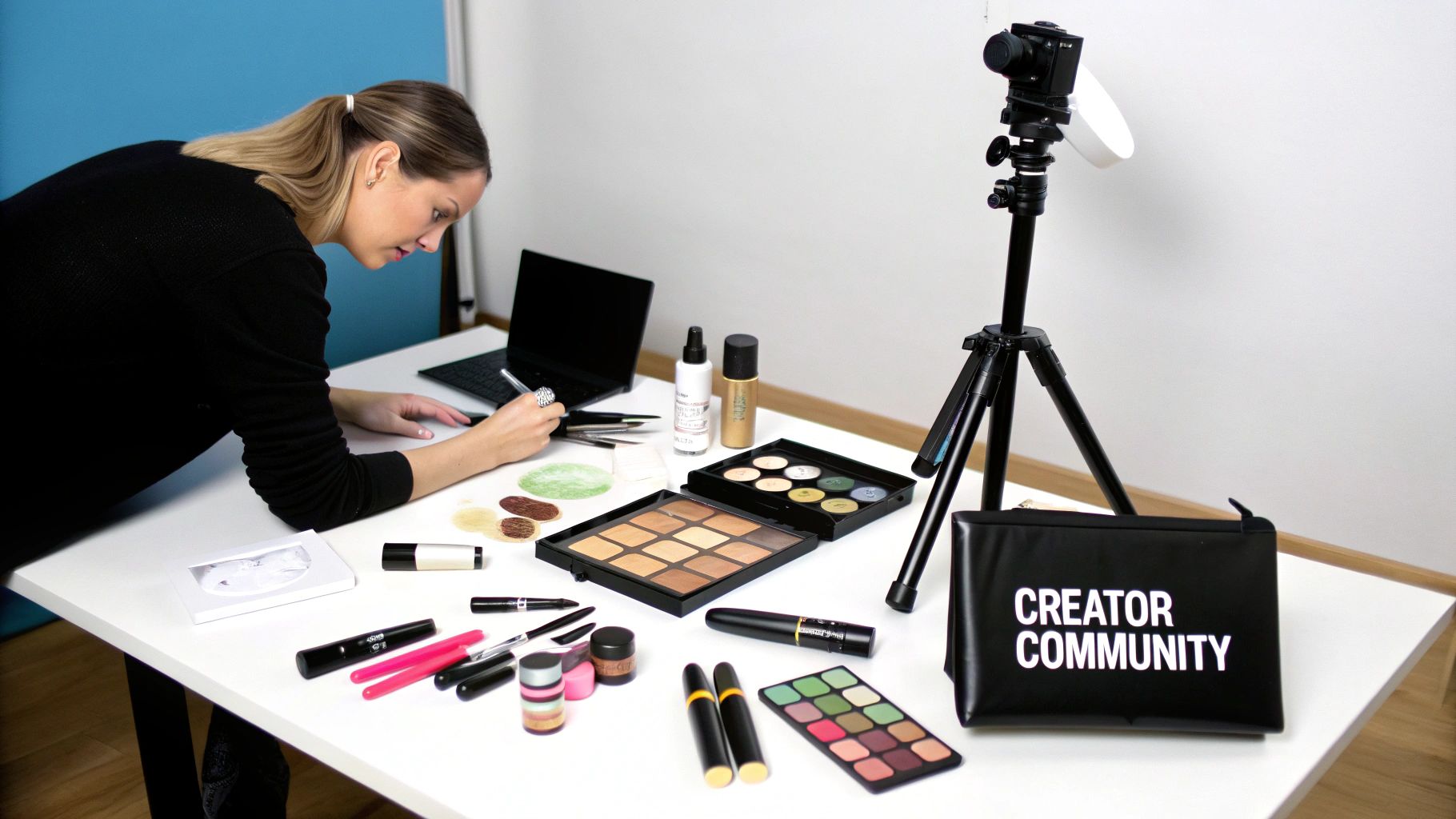
Glossier revolutionized the beauty industry by building its brand on the foundation of an authentic, creator-driven community. Instead of relying on a few high-cost celebrity endorsements, the company cultivated a vast network of micro and mid-tier influencers who genuinely loved and used their products. This influencer marketing example demonstrates how to scale a direct-to-consumer brand by empowering real customers to become your most effective advertisers.
The strategy centered on identifying and nurturing relationships with emerging creators on Instagram and TikTok. These partners were not just given a script; they were treated as co-creators and brand ambassadors, generating authentic content that resonated deeply with their followers. The result was a powerful flywheel where user-generated content (UGC) drove both brand awareness and direct conversions, making Glossier feel less like a corporation and more like a community.
Strategic Breakdown and Key Results
Glossier's approach was systematic and scalable. Through programs like the 'Into the Gloss' community, they activated over 500 creators who embodied their minimalist, "skin first" ethos. This distributed network became a core part of their customer acquisition engine, at one point driving an estimated 40% of new customer growth.
Key Insight: Glossier proved that authentic, creator-generated content can significantly outperform polished, brand-produced assets. Their UGC campaigns saw 3x higher engagement rates, validating the idea that modern consumers trust peer recommendations over traditional advertising.
How to Replicate This Strategy
For mobile app and consumer brand founders, Glossier’s model provides a clear blueprint for community-led growth.
- Start with Organic Fans: Identify creators who already use and post about your product organically. These are your most authentic and powerful potential partners.
- Implement a Tiered Program: Create a structured creator program with clear tiers (e.g., product gifting, affiliate commissions, paid partnerships). This allows you to work with creators at different levels and scale your program efficiently.
- Build a Content Curation System: Establish a process to collect, manage, and repurpose creator-generated content across your own marketing channels (e.g., social media, ads, website).
- Create Feedback Loops: Use your creator community as a focus group. Gather their insights on product features, messaging, and market trends to inform your business strategy. This turns a marketing channel into a valuable R&D resource.
2. TikTok's Douyin Case: Influencer-Driven App Virality
Douyin, the Chinese version of TikTok, pioneered a growth model that treated its platform-native creators as the primary engine for user acquisition. Instead of relying on traditional paid advertising, the app built an ecosystem that systematically identified, incentivized, and amplified creators. This powerful influencer marketing example shows how a mobile app can achieve exponential, organic growth by making influencer networks its core distribution channel.
The strategy was built on an algorithm that rewarded viral content production, creating a flywheel effect where engaging videos attracted new users, who then became creators themselves. ByteDance replicated this model for TikTok’s global expansion, turning challenges, trends, and creator-led content into the main driver of its rapid market penetration. This approach fundamentally changed the user acquisition playbook for consumer apps.
Strategic Breakdown and Key Results
ByteDance’s creator-first strategy was a masterclass in scalable growth. In China, Douyin grew from 100 million to over 600 million monthly active users in just 18 months, largely through its creator ecosystem. TikTok's US expansion replicated this success, reaching 100 million users in under two years.
Key Insight: TikTok proved that an app's primary growth loop can be powered by creators. By creating tools and incentives like the Creator Fund, which attracted over 1 million active creators in its first year, the platform ensured a constant supply of engaging content that kept the acquisition engine running.
How to Replicate This Strategy
For mobile app founders, TikTok's model offers a blueprint for building a self-sustaining, creator-powered growth engine.
- Incentivize Virality, Not Just Engagement: Design creator programs and algorithms that reward content that reaches new audiences, not just content that engages existing followers. This directly fuels user acquisition.
- Lower the Barrier to Creation: Develop features like trend templates, audio libraries, and video filters that make it easy for new users to participate and create content. This expands your potential creator base.
- Use Data to Nurture Talent: Leverage your app's data to identify emerging creators with high potential. Create onboarding programs and educational resources to help them create their first viral video quickly.
- Treat Creators as a Separate Cohort: Track creator lifetime value (LTV) and creator acquisition cost (CAC) separately from user metrics. This helps you understand the true ROI of your creator ecosystem and optimize your investment in it.
3. Haus Labs' Influencer Launch Strategy (Makeup App Launch)
Haus Labs demonstrated how to orchestrate a high-impact app launch using a concentrated influencer blitz. Backed by celebrity makeup artist Manny MUA, the brand partnered with over 100 beauty creators across TikTok, Instagram, and YouTube to generate massive pre-launch hype and a surge of day-one installs. This influencer marketing example is a masterclass in using coordinated creator campaigns to dominate app store charts from the very beginning.
The strategy involved activating a diverse army of creators simultaneously during the launch week. Each creator produced content showcasing the app's digital makeup features, driving their followers to download with a unified call to action. This created a powerful wave of social proof and urgency, which directly translated into immediate user acquisition and favorable app store algorithm signals.
Strategic Breakdown and Key Results
Haus Labs' campaign was a textbook execution of a coordinated launch. By enlisting 100+ partners, they ensured their message saturated the beauty community, generating over 50 million impressions in the first week. The concentrated effort propelled the app to #5 in the US Beauty category just two days after launch, with an incredible 500,000+ downloads in the first week.
Key Insight: A simultaneous, multi-channel influencer push creates a network effect that dramatically amplifies reach and impact. The surge in downloads and engagement signals to app store algorithms that the app is trending, which boosts organic visibility and compounds growth.
How to Replicate This Strategy
For mobile app founders planning a launch, the Haus Labs model offers a powerful playbook for making an immediate impact.
- Recruit Early: Begin creator outreach 8-12 weeks before your planned launch date. This provides ample time for onboarding, content planning, and creative development.
- Create a Unified Content Calendar: Coordinate posting times, content angles, and specific calls to action across all creators. This ensures a concentrated and consistent message during the critical launch window.
- Incentivize Downloads: Provide creators with exclusive in-app features, rewards, or affiliate links that give their audience a compelling reason to install the app immediately.
- Establish Clear Metrics: Set up clear performance metrics and payout structures tied to install attribution. Use unique tracking links for each creator to accurately measure their impact and ROI.
4. Bumble's Female-First Influencer Ecosystem Campaign
Bumble differentiated itself in the crowded dating app market by building its brand around a core value: female empowerment. Instead of generic influencer marketing, they created a curated ecosystem of female creators who genuinely aligned with their "women make the first move" ethos. This influencer marketing example shows how to use value-aligned partnerships to build a powerful brand identity and a loyal user base.
The strategy focused on long-term relationships with a diverse range of creators, from macro-celebrities like Serena Williams to grassroots feminism advocates. These partners were not just promoting an app; they were championing a movement. Their authentic content reinforced Bumble's brand mission, turning influencer marketing into a powerful tool for brand differentiation and community building, not just user acquisition.
Strategic Breakdown and Key Results
Bumble’s approach was deeply integrated with its brand identity. They partnered with over 50 female creators who acted as long-term ambassadors, creating content that generated over 200 million impressions across TikTok and Instagram. This value-driven ecosystem was a key driver behind the company's impressive 50% year-over-year growth in female-identifying users.
Key Insight: Bumble proved that influencer marketing is most powerful when it is an extension of core brand values. By prioritizing mission alignment over mere reach, they built a moat around their brand that competitors found difficult to replicate, turning users into passionate advocates.
How to Replicate This Strategy
For founders building value-driven brands, Bumble’s playbook offers a blueprint for creating an authentic influencer ecosystem.
- Define Your Creator Rubric: Establish a clear set of criteria for selecting partners based on your core brand values. Do not just look at follower counts; assess their content, voice, and community alignment.
- Prioritize Long-Term Partnerships: Shift from one-off sponsored posts to 6-12+ month ambassador programs. This fosters deeper relationships and more authentic advocacy.
- Co-Create and Empower: Involve your creator ecosystem in product feedback and marketing strategy discussions. This makes them feel like true partners and provides invaluable market insights.
- Measure Brand Affinity: Track metrics beyond installs and clicks. Use brand lift studies and sentiment analysis to measure the impact on brand perception, affinity, and long-term customer value.
5. FitBit's Micro-Influencer Health Advocacy Model
Fitbit pioneered a performance-based micro-influencer model that became a blueprint for health and wellness app growth. Instead of focusing on high-cost celebrity endorsements, the company built a distributed network of over 500 health and fitness micro-influencers (10K-100K followers). This influencer marketing example highlights how to scale user acquisition through authentic, performance-driven partnerships.
The strategy prioritized creators with genuine, highly-engaged communities who could speak credibly about health tracking. Rather than paying flat fees, Fitbit leveraged affiliate models, tying compensation directly to app downloads and device sales. This performance-based approach minimized upfront risk and ensured that marketing spend was directly correlated with tangible business results, driving the brand to over 15 million active users.
Strategic Breakdown and Key Results
Fitbit's program was built for scale and efficiency. By providing creators with unique tracking links and a transparent dashboard, they empowered partners to monitor their own performance and optimize their content. This self-serve system created thousands of earnings opportunities and allowed Fitbit to manage a large network without a massive internal team. This model proved to be incredibly cost-effective, with micro-influencer channels achieving a 30-40% lower Customer Acquisition Cost (CAC) compared to traditional paid advertising channels.
Key Insight: A performance-based model aligns incentives perfectly. Creators are motivated to produce content that not only engages but also converts, turning them into true growth partners rather than just paid spokespeople.
How to Replicate This Strategy
For mobile apps, especially in the health, wellness, and tech sectors, Fitbit's affiliate model is highly replicable.
- Build a Self-Serve Platform: Use affiliate marketing software or build a simple portal where creators can sign up, get unique tracking links, and access creative assets with minimal friction.
- Offer Transparent Dashboards: Provide partners with real-time data on their clicks, conversions, and earnings. Transparency builds trust and helps them improve performance.
- Implement Tiered Incentives: Reward your top-performing creators with higher commission rates, bonuses, or exclusive access to new products. This gamifies the program and encourages loyalty.
- Establish a Creator Community: Create a dedicated Slack channel or private group to share best practices, offer support, and gather valuable product feedback directly from your most effective advocates.
6. TikTok Shop's Creator Commerce Integration Campaign
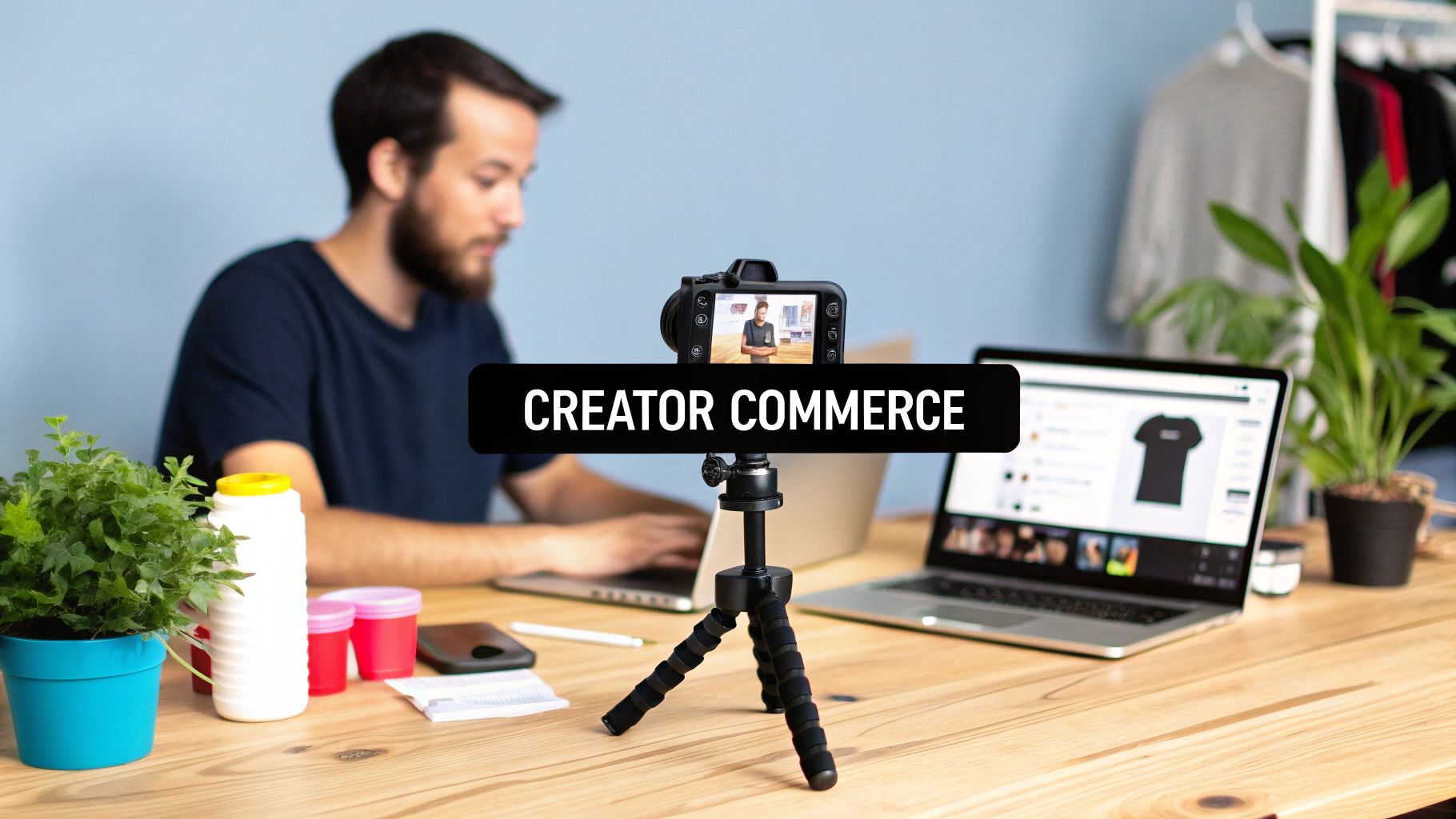
TikTok Shop transformed its platform into a powerful e-commerce engine by seamlessly integrating creators into the sales process. This approach blurred the lines between influencer marketing and direct commerce, empowering creators to become merchants who sold products directly to their followers. This influencer marketing example showcases how to build a scalable customer acquisition channel by turning creators into a distributed sales force.
The strategy involved providing creators with integrated storefront tools, allowing them to tag products in videos and host live shopping events. Instead of simply promoting a brand, influencers became the point of sale, handling everything from product discovery to checkout within the TikTok app. This created a frictionless shopping experience driven by trusted personalities, making commerce feel like native content.
Strategic Breakdown and Key Results
TikTok Shop's creator commerce model was built for massive scale. By onboarding thousands of creators, the platform effectively decentralized its marketing and sales efforts. In its first year, it enabled over 10,000 creator storefronts, leading to explosive growth. In test markets alone, creator-driven commerce generated over $1 billion in GMV, with top creators earning six to seven-figure incomes annually.
Key Insight: Converting creators from advertisers into direct sellers dramatically shortens the customer journey and increases conversion rates. By making the creator the storefront, TikTok saw a 50% higher purchase intent compared to traditional social media ads.
How to Replicate This Strategy
For consumer brands and mobile apps, TikTok Shop’s playbook offers a model for building a creator-led sales channel. To replicate this success, brands should deeply understand how to promote products on TikTok and actually drive sales.
- Equip Creators with Sales Tools: Provide creators with unique affiliate links, personalized storefronts, or discount codes that are easy to share and track.
- Offer Logistical Support: Simplify the process by handling fulfillment, shipping, and customer service. This allows creators to focus on what they do best: creating content and selling.
- Build a Tiered Commission Structure: Incentivize performance by offering higher commission rates, bonuses, or exclusive perks to top-selling creators.
- Leverage Live Shopping: Host creator-led live shopping events to create urgency and drive sales in a concentrated timeframe. These events can serve as powerful user acquisition moments.
7. Dollar Shave Club's Viral UGC Campaign (Pre-Influencer Era)
Dollar Shave Club's legendary launch video did not just sell razors; it created a new playbook for direct-to-consumer marketing. While predating the modern creator economy, this campaign is a quintessential influencer marketing example because its founder, Michael Dubin, became the brand's first and most powerful influencer. The strategy showcased how authentic, humor-driven storytelling could generate massive organic reach and build a brand personality from day one.
The campaign's genius was its raw, unpolished, and hilarious video featuring Dubin himself. This UGC-style approach was a radical departure from the aspirational, celebrity-led ads of competitors like Gillette. It resonated with audiences tired of corporate marketing, proving that a founder's passion and personality could be a brand’s greatest asset. This viral momentum laid the groundwork for future creator partnerships that felt equally genuine and disruptive.
Strategic Breakdown and Key Results
The initial launch video was the core asset, designed for virality with its witty script and low-budget charm. It quickly amassed over 12 million views and drove more than 100,000 sign-ups in its first few months. This organic growth was so explosive that it propelled the company to a $100 million valuation before its Series A funding, a testament to the power of content-led customer acquisition.
Key Insight: Founder-led, authentic content can build more trust and generate higher ROI than polished corporate advertising. Dollar Shave Club proved that humor and relatability are powerful tools for cutting through a crowded market and acquiring customers at a fraction of the traditional cost.
How to Replicate This Strategy
For founders looking to make a splash, Dollar Shave Club's model offers a powerful, low-cost path to viral growth.
- Put the Founder Front and Center: Your passion and story are unique assets. Create content that features the founding team to build an authentic connection with early adopters.
- Prioritize Authenticity Over Production: Focus on a clever script and genuine delivery, not a high production budget. Use basic equipment to create content that feels real and relatable.
- Build a Community Feedback Loop: Use your early audience to test messaging and iterate on your brand's positioning. Their engagement will guide your content strategy.
- Layer in Creator Partnerships: Once you gain initial momentum, partner with micro-creators who share your brand's tone and values. Use your founder-led content as the blueprint for their creative briefs to ensure consistency.
8. Kwai's Creator Incentive Program (Emerging Markets Growth)
Kwai, a short-form video app, executed an aggressive growth strategy in emerging markets like Latin America and Southeast Asia by directly incentivizing creators. Instead of competing with established players on brand recognition, Kwai focused on building a large and motivated creator base through financial rewards. This influencer marketing example showcases how to use direct compensation to bootstrap a platform's network effects and rapidly acquire users.
The core of the strategy was a multi-faceted incentive program that paid creators for views, engagement, and new user referrals. By making monetization accessible to a broad swath of aspiring creators, Kwai built a creator ecosystem that dwarfed competitors. This approach turned content creation into a viable income stream for thousands, fueling an explosion of localized content and driving exponential user growth.
Strategic Breakdown and Key Results
Kwai's creator-first model was designed for hyper-growth. By directly tying creator rewards to platform growth metrics, they aligned incentives perfectly. The program helped Kwai grow its creator base from just 10,000 to over 500,000 within 18 months in key markets. This content engine propelled the app to over 300 million monthly active users and proved to be a highly efficient acquisition channel.
Key Insight: Direct financial incentives can be a powerful lever to overcome brand disadvantages in competitive markets. By prioritizing creator economics, Kwai's user acquisition cost was reportedly reduced by up to 70% compared to traditional performance marketing channels.
How to Replicate This Strategy
For mobile apps looking to scale in new regions, Kwai’s playbook offers a blueprint for building a powerful creator-led growth engine.
- Structure Tiered Compensation: Design a creator payment model that rewards both content quality (engagement) and quantity (views, referrals). This ensures a steady stream of engaging content.
- Build Creator Education: Develop programs and resources that teach creators how to optimize their content for your platform’s algorithm. This improves content quality and creator retention.
- Implement Robust Fraud Detection: When offering direct financial incentives, invest in strong systems to detect and prevent abuse, such as view-bots or fake referrals.
- Gamify the Experience: Create leaderboards, status tiers, and public recognition to foster a sense of competition and community among creators, encouraging them to produce more and better content.
9. Skillshare's Instructor Creator Network Model
Skillshare flipped the traditional influencer model on its head by transforming its content creators into its primary growth engine. Instead of paying influencers to promote its platform, Skillshare empowered thousands of instructors to build their own audiences and businesses on its service. This influencer marketing example showcases how a platform can achieve massive scale by making creators its core partners, not just temporary promoters.
The strategy was to build a creator-centric ecosystem where instructors were incentivized to drive their own student followings to the platform. By providing tools, monetization opportunities, and a built-in community, Skillshare turned teachers into powerful affiliates. Each new instructor became a new, highly-targeted acquisition channel, creating a powerful network effect that fueled exponential growth.
Strategic Breakdown and Key Results
Skillshare’s model decentralized marketing by activating over 10,000 instructors as individual growth nodes. This approach allowed the company to reach millions of niche audiences authentically, with top instructors driving over 100,000 students to the platform annually. This creator-led acquisition strategy was instrumental in growing Skillshare to more than 8 million subscribers.
Key Insight: Skillshare demonstrated that when you align your business model with your creators' success, they become your most effective and scalable marketing channel. This model reportedly helped reduce user acquisition costs by 40-50% compared to traditional paid channels.
How to Replicate This Strategy
For marketplaces, platforms, or apps that rely on user-generated content, Skillshare’s instructor-led model offers a powerful growth blueprint.
- Build an Efficient Onboarding Funnel: Create a streamlined process for creators to publish their first piece of content. The faster they see value, the more invested they become.
- Provide Transparent Revenue Tools: Offer creators clear dashboards and predictable earnings forecasts. Transparency builds trust and encourages them to invest more effort into promoting the platform.
- Foster a Creator Community: Launch community forums or private groups where creators can share growth tactics and best practices. Peer-to-peer learning is a powerful retention tool.
- Create Promotional Levers: Offer marketing support to top-performing creators, such as featured placements, email promotions, or co-marketing opportunities. This incentivizes high-quality content and platform loyalty.
10. Reddit's Community Moderator Influencer Program
Reddit pioneered a decentralized influencer model by empowering its volunteer community moderators as the primary drivers of engagement and growth. Instead of paying creators, Reddit built a framework where influential community leaders curate content, enforce norms, and foster participation organically. This influencer marketing example shows how platforms can scale by turning passionate users into powerful, self-governing brand advocates.
The strategy hinges on granting autonomy and tools to moderators who manage individual subreddit communities. These moderators are not traditional influencers; they are the platform's core user base, intrinsically motivated to nurture their niche interests. Their authority and dedicated efforts create trusted, highly engaged micro-communities, which in turn drive user acquisition and retention for the entire platform, now serving over 430 million monthly active users.
Strategic Breakdown and Key Results
Reddit's model is built on distributed influence, with over 100,000 active communities run by volunteer moderators. This approach effectively outsources content moderation and community management, allowing the platform to scale massively without proportional overhead. The success of this system is evident in the platform's user-driven growth, with top subreddits generating millions of interactions daily without direct brand intervention.
Key Insight: Empowering users with ownership and moderation tools creates a powerful sense of community that drives higher long-term retention than paid influencer campaigns. The trust vested in moderators makes their communities sticky and self-sustaining, a model now replicated by platforms like Discord and Slack.
How to Replicate This Strategy
For apps and consumer brands looking to build a dedicated user base, Reddit's community-led approach offers a powerful blueprint.
- Identify and Empower Superusers: Find your most active and passionate users. Give them special status, early access to features, and tools to help them lead discussions or organize events within your platform.
- Build a Moderator Toolkit: Provide your community leaders with the necessary tools to manage their spaces effectively. This includes moderation bots, user management features, and clear communication channels with your team.
- Create Recognition Programs: While not monetary, recognition is key. Implement leaderboards, special badges, or exclusive "moderator-only" forums to motivate and reward their contributions.
- Establish Clear Governance: Develop and share clear community guidelines and moderation policies. This ensures consistency and gives your leaders the confidence to enforce rules fairly, protecting the community's integrity.
10-Case Comparison: Influencer Marketing Campaigns
Putting These Strategies into Action for Your Brand
The diverse collection of influencer marketing examples we have explored reveals a fundamental truth. The most successful campaigns are not built on one-off viral moments or fleeting trends. Instead, they are the result of deliberate, strategic systems designed for scalability, measurement, and authentic connection.
From Glossier's creator-driven community to Reddit's moderator-led engagement, a clear pattern emerges. True growth comes from empowering creators, not just renting their reach. Whether through performance-based affiliate networks, coordinated launch blitzes, or values-driven communities, the underlying theme is a methodical, data-informed approach. Each successful influencer marketing example presented in this article serves as a testament to this principle. They demonstrate that moving beyond simple brand awareness toward a powerful, creator-led growth engine is entirely achievable with the right framework.
Your Roadmap: From Examples to Execution
Translating these insights into a tangible strategy for your own brand is the critical next step. The journey from inspiration to implementation requires a focused, iterative process. Here is a simplified framework to guide your efforts, drawing directly from the successes of brands like Haus Labs, Bumble, and Skillshare.
- Define Your Core Objective: Before you contact a single influencer, pinpoint your primary goal. Is it user acquisition for your new app, driving first-time purchases for your e-commerce store, or building a long-term brand community? Your objective dictates everything: the type of creator you partner with, the campaign structure, and the key metrics you will track.
- Identify Your Creator Archetype: Think beyond follower counts. As seen with FitBit’s micro-influencer model, the right creator is one whose audience perfectly aligns with your target customer profile. Consider their engagement rates, content style, and, most importantly, the trust they have cultivated. Your ideal partner is a genuine advocate, not just a billboard.
- Start Small and Test Hypotheses: You do not need a massive budget to begin. Start with a small cohort of diverse creators to test different creative approaches, messaging, and offers. This initial phase is about gathering data and learning. Which creator type drives the most app installs? Which call to action generates the highest conversion rate?
- Build a Scalable System: Once you identify what works, build a system to replicate it. This could be a tiered affiliate program like TikTok Shop's model, an ambassador program that nurtures long-term relationships, or a streamlined process for sourcing and onboarding new creators. The goal is to create a predictable, repeatable engine for growth.
Key Takeaways for Lasting Impact
As you build your strategy, keep these core principles at the forefront. They are the common threads that connect every powerful influencer marketing example we have analyzed.
- Authenticity Over Everything: Modern consumers can spot an inauthentic partnership instantly. The campaigns that resonate most deeply are those where the creator genuinely believes in the product.
- Co-Creation is Key: Empower your creators. Give them creative freedom within a clear strategic framework. The best content arises when a creator's unique voice and style merge with your brand's core message.
- Data Drives Decisions: Track everything. Use unique tracking links, promo codes, and post-purchase surveys to attribute results accurately. This data is essential for optimizing your campaigns and proving ROI.
The ultimate lesson from these examples is that influencer marketing has evolved far beyond a simple marketing channel. It is a powerful method for building communities, launching products, and creating sustainable growth. By applying these strategic frameworks, you can move past isolated campaigns and build a formidable, creator-powered marketing function that delivers measurable and repeatable results.
Ready to turn these examples into your own success story? The expert team at Adworkly combines human strategy with powerful AI to design, execute, and scale high-performance influencer campaigns. We build the systems that transform your influencer investment into a transparent, repeatable growth engine. Visit Adworkly to see how we can build your next great campaign.