
 UGC Infra
A Guide to Influencer Marketing That Drives Growth
Learn how influencer marketing drives real growth. Our guide covers finding partners, building campaigns, measuring ROI, and using AI to improve your results.
Influencer marketing is a partnership. A brand works with an influential person, a creator, to discuss its products or services. The strategy relies on the trust that influencer built with their audience. This allows the brand's message to come from a voice people know and respect.
It is an effective way to cut through the noise and speak directly to an engaged community.
How Influencer Marketing Works
The idea behind influencer marketing is simple: people trust recommendations from those they admire. Instead of a brand sending out ads, it finds an influencer who naturally includes the product in their content. The creator then shares that content with their loyal audience on platforms like Instagram, TikTok, or YouTube.
This works well because it does not feel like a traditional ad. It feels more like a suggestion from a friend. The influencer integrates the product in a way that fits their usual style. The message lands without the skepticism that often meets a corporate advertisement. Authenticity is everything.
The Foundation of Trust and Authenticity
An influencer's value is not their follower count; it is the relationship they have with their audience. People see them as relatable, trustworthy sources. When a creator recommends something, their followers are more likely to listen because the message comes from someone they feel a connection with.
The success of influencer marketing depends on the genuine bond between a creator and their audience. When a recommendation feels real, it carries more weight than a polished corporate ad. That trust drives people to act.
Finding the right fit is critical. A brand must find creators whose personal brand and audience align with its own. A bad match feels forced. It can instantly damage the credibility of both the brand and the influencer.
The Growth of the Influencer Economy
The market for influencer marketing is expanding quickly. This signals a shift in how companies think about their advertising budgets. More money is moving toward personal, creator-driven campaigns.
The industry is on track to hit a global market size of 32.55 billion** in 2025. For perspective, it was **10 billion in 2020. This growth shows the confidence brands now have in this channel. You can discover more insights about the influencer marketing industry growth and see where things are headed.
The diagram below breaks down the basic flow of how a message travels from the brand to the consumer.
The brand works through the creator to reach potential customers. It uses the influencer's built-in credibility as the bridge.
The Core Process of a Campaign
A good campaign is not thrown together. It follows a clear process to make sure everyone is on the same page and working toward the same goal. The brand starts by defining what success looks like. Are you trying to get your name out there? Drive traffic to your app store page? Increase sales of a new feature?
Once you know your objective, the process unfolds in a few key stages:
- Influencer Discovery: This is the matchmaking phase. You look for creators who fit your brand's style and have an engaged audience that matches your ideal customer.
- Collaboration and Briefing: Time to reach out. You will connect with your chosen influencer and present a clear proposal. The proposal covers campaign goals, content expectations, and compensation.
- Content Creation: The fun part. The creator works to produce authentic content that features your product or service. They will follow the guidelines you agreed on but will put their own spin on it. That is what their audience loves.
- Campaign Launch and Promotion: The content goes live on the influencer's channels. Often, the brand will also share and promote the content on its own social media accounts or through paid ads to give it extra reach.
Choosing the Right Influencers for Your Brand
Finding the right influencer is the most critical decision in your campaign. A great partner can plug your brand directly into a community that listens to their every word. A mismatch can fall flat, waste your budget, and make your brand look out of touch.
The goal is to find creators whose style, values, and audience are a perfect mirror of your own. This is not about chasing big follower counts. It is a strategic matchmaking process that demands research and a clear vision of what you hope to accomplish.
Understanding the Tiers of Influence
Influencers are not a one-size-fits-all group. They are usually broken down into "tiers" based on their follower count. Each tier offers a different set of pros and cons. Knowing these categories helps you focus on the right type of partner for your specific goals and budget.
Here’s a quick rundown of the four main tiers you will encounter:
- Nano-Influencers (1,000 to 10,000 followers): These creators have smaller, tight-knit communities. A recommendation from them feels less like an ad and more like advice from a trusted friend. They often have high engagement.
- Micro-Influencers (10,000 to 100,000 followers): This is the sweet spot for many brands. Micro-influencers are often experts in a specific niche, which gives them credibility. They strike a great balance between reach and authenticity.
- Macro-Influencers (100,000 to 1 million followers): Think of these as established social media personalities. They have a broad appeal and can get your brand in front of a lot of people. They are perfect for large-scale awareness campaigns.
- Mega-Influencers (1 million+ followers): These are celebrities and A-list internet stars. They offer massive visibility, but their partnerships come with a high price tag and can sometimes feel impersonal to the audience.
Data often shows that smaller is better for engagement. For example, micro-influencers in the 5,000 to 20,000 follower range see an average engagement rate of 3.86%. This is higher than their macro-level counterparts. Women make up 84% of all creators, with the 25 to 34 age group being the largest demographic.
Comparing Influencer Tiers by Follower Count and Engagement
To make the choice clearer, this table breaks down how the different influencer tiers stack up. Use it to figure out which type aligns best with your campaign goals, whether you are after massive reach or deep, meaningful engagement.
The "best" tier is subjective. It comes down to what you want to achieve. Do not look only at the follower count. Consider the type of connection and impact you want to make.
Key Factors for Vetting Potential Partners
Once you have a shortlist of potential influencers, it is time to dig deeper. Looking past the follower count is required if you want to find a true partner for your brand. A solid vetting process is what separates a successful campaign from a wasted investment.
Here are the critical points to check:
- Audience Demographics: Does their audience line up with your target customer? You need to get specific here. Look at their follower analytics for age, location, gender, and interests to make sure you are talking to the right people.
- Engagement Rate: A million followers means nothing if nobody is listening. Calculate their engagement rate (likes, comments, shares) relative to their follower size. A healthy rate is a clear sign of a loyal and active community.
- Content Quality and Authenticity: Go scroll through their feed. Is the quality of their photos and videos up to your brand's standards? More importantly, does their voice feel real? Do their sponsored posts feel natural or forced?
- Brand Alignment: Do their values and personal brand make sense with yours? An influencer who champions sustainable living is a terrible fit for a fast-fashion brand. The partnership has to feel logical and believable to their audience.
This is a great visual for understanding how the pieces fit together.
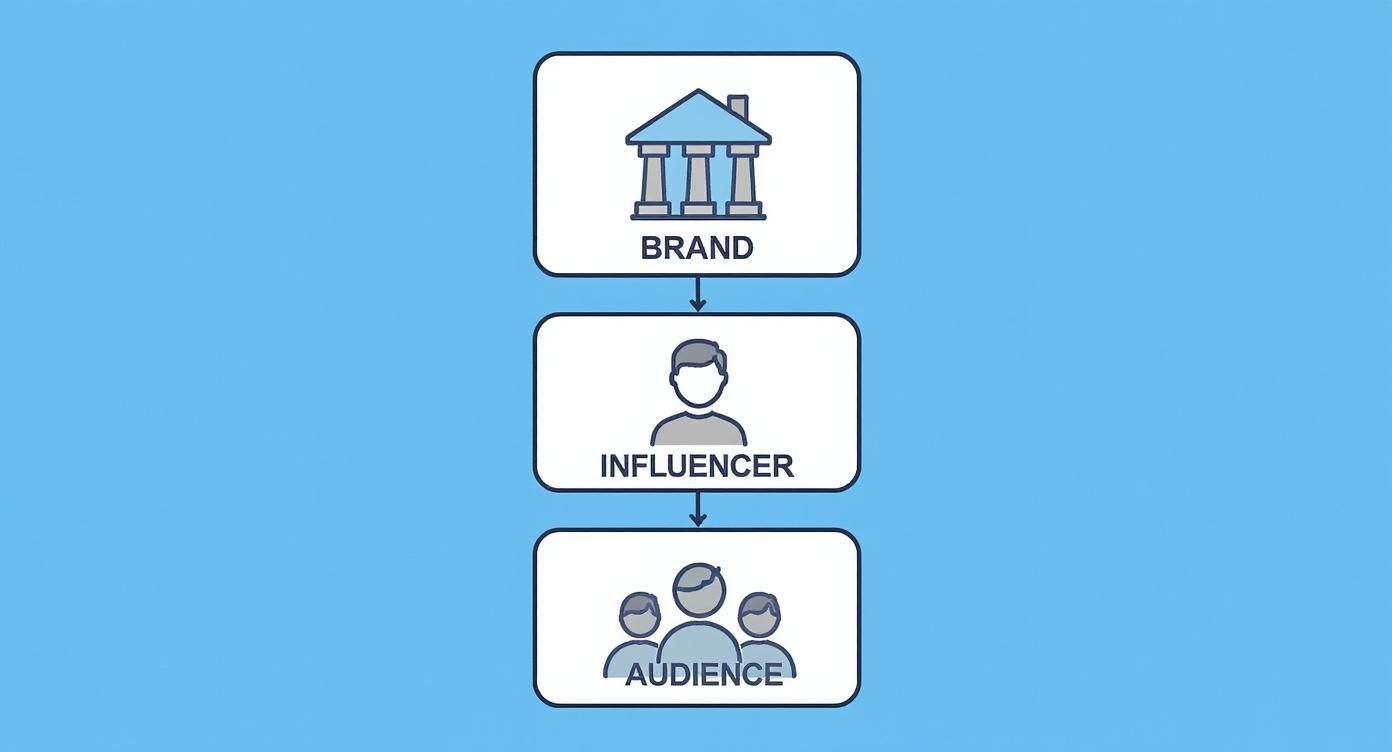
The influencer is the bridge. They take your brand's message and translate it into something their audience will welcome and trust.
Tools and Platforms for Influencer Discovery
Manually sifting through social media to find the right influencers can be a grind. Thankfully, many platforms and tools are available to make this discovery process faster and more effective. These tools help you make data-driven decisions instead of guessing.
Many of these platforms offer searchable databases that let you filter creators by niche, location, follower count, and key engagement metrics. Others go deeper, providing analytics on an influencer's audience health to help you find fake followers or bot activity. These tools are valuable. While authenticity is the goal with influencers, it is also smart to understand customer-driven content. You can learn about it in our guide on what is a UGC creator.
When you vet an influencer, you are not checking their numbers. You are evaluating their ability to build and maintain a genuine community. A creator who prioritizes their audience’s trust is the most valuable asset you can find.
Laying the Groundwork for a Winning Influencer Campaign
Throwing money at an influencer with a huge follower count and hoping for the best is not a strategy. It is a gamble. A successful campaign is built on a solid plan. A roadmap that connects your business goals directly to the influencer's work. This plan ensures everyone, from your marketing team to the creator, is on the same page and working toward the same definition of success.
The first thing you need to do is decide what a "win" looks like for you. Without that, you are flying blind.
Set Goals You Can Measure
Before you start scrolling through influencer profiles, you have to lock in your campaign goals. Vague ambitions like "get more exposure" are useless. You need concrete, measurable targets that tie back to what your business is trying to accomplish.
These goals will dictate every decision you make down the line. The type of influencer you partner with, the content they create, and the numbers you will be watching to see if it all worked.
Here are a few common goals people set:
- Increase Brand Awareness: This is all about getting your name out there. You will measure success by tracking metrics like reach, impressions, and how much your own follower count grows.
- Drive Sales or App Installs: This is a bottom-line goal. You can track this with custom promo codes, unique affiliate links, or by sending traffic to a specific landing page. It is a direct line from their content to your revenue.
- Generate High-Quality Leads: A popular goal for B2B companies or brands with a longer sales process. Success here is measured by the number of email sign-ups, demo requests, or contact forms filled out.
- Increase Audience Engagement: This one is about building a community and a conversation around your brand. You will keep an eye on likes, comments, shares, and saves on the campaign content.
Choosing the right goal is the foundation of your strategy. It sets the tone for the entire campaign and defines what success means.
Create a Crystal-Clear Campaign Brief
With your goals in place, it’s time to draft a comprehensive campaign brief. Think of this document as the "single source of truth" for your influencer partner. It lays out all your expectations, key messages, and creative guardrails. This reduces confusion and makes sure the final content feels like it came from your brand.
A solid brief is the difference between a nightmare of revisions and a smooth, creative partnership.
A well-written brief respects the creator's expertise while giving them the structure they need to hit your targets. It is the key to getting content that works for both of you.
Your brief should be thorough. Make sure it includes:
- Campaign Objectives: Remind the influencer exactly what you are trying to achieve.
- Key Talking Points: What are the non-negotiable messages about your app or product? List them out.
- Content Deliverables: Be specific. Do not say "some posts." Say "one Instagram Reel and three Stories."
- Creative Guidelines: Offer direction on the style and aesthetic, but do not try to micromanage. Give them room to be creative.
- The "Do's and Don'ts": List any words you want them to use (or avoid) and call out any competitors you do not want to be mentioned.
- Timeline and Deadlines: Lay out clear dates for when drafts are due and when the content should go live.
Pick the Right Campaign Type
Different goals require different tactics. The campaign format you choose should be a direct match for your objectives and the platform where your ideal customers spend time. A campaign designed for a quick sales spike will look different from one meant to build long-term brand loyalty.
Here are a few go-to campaign formats:
- Sponsored Posts: This is the classic approach. An influencer creates a post, video, or story dedicated to your product. It is perfect for generating fast awareness or pushing a limited-time offer.
- Product Reviews: You send your product to an influencer and they share their honest thoughts. This builds trust and credibility, especially when the review feels genuine and unscripted.
- Brand Ambassadorships: This is about playing the long game. You form a lasting partnership with an influencer who promotes your brand over months or years. This builds a deep, authentic connection that makes their endorsements feel credible.
- Giveaways and Contests: Want to increase engagement and grow your follower numbers fast? This is your ticket. The influencer runs a contest where their audience has to follow your brand or engage with your content to win.
Lock in Compensation and Contracts
The final steps before launch are settling on payment and getting a contract signed. The right compensation model depends on your budget, goals, and the influencer's rates. It could be a flat fee, a commission on sales, or providing free products (product seeding).
A clear, well-defined contract protects you and the influencer. It needs to spell out every detail: deliverables, payment terms, who owns the content, and disclosure requirements (like using #ad). This formal agreement gets everyone on the same page and gives you legal standing if something goes wrong. To make finding partners easier, you might want to check out our list of the best influencer marketing platforms to help manage your campaigns.
Measuring Your Influencer Marketing ROI
You’ve launched your campaign. Now for the big question: Did it work? Tracking performance is not about watching vanity numbers climb. It is about justifying your budget and gathering intel to make your next campaign more successful. This is how you measure your return on investment (ROI) and see the real business impact of your efforts.
This process turns influencer marketing from a creative experiment into a predictable growth engine. You stop hoping for results and start knowing exactly what drives them.
Key Metrics to Monitor
To get a feel for your campaign's performance, you need to look at a mix of metrics. Some will tell you how many people saw your content. Others show how many people took action. Together, they paint the full picture.
First, let's look at the top of the funnel. The metrics that measure awareness and visibility. These tell you how far your message traveled.
- Reach: This is the total number of unique people who saw the influencer's content. Think of it as the size of the audience you managed to connect with.
- Impressions: This is the total number of times the content was displayed in someone's feed, regardless of whether they clicked. A high impression count means your content was showing up frequently.
Next are engagement metrics. These are crucial because they show how the audience interacted with the content. They give you a strong signal of their interest.
- Engagement Rate: This is the percentage of the audience that liked, commented, or shared a post. You calculate it by dividing total engagements by reach. It is one of the best indicators of high-quality, resonant content.
- Click-Through Rate (CTR): This one is simple: how many people clicked a link in the influencer’s post, story, or bio? A solid CTR means the call to action was compelling enough to make people move.
Finally, we get to the bottom line: conversion metrics. These tie the campaign directly to tangible business results. They are the most important numbers for calculating your financial return.
- Conversions: This tracks the number of desired actions taken, whether that is app installs, newsletter sign-ups, or purchases. It is the ultimate measure of whether your campaign drove action.
- Cost Per Acquisition (CPA): This is your total campaign cost divided by the number of new customers you gained. A low CPA means you are getting new customers cheaply. A huge win.
Tools for Accurate Sales Attribution
How do you know a sale came from a specific influencer and not somewhere else? That is where attribution tools come in. These methods create a clear link between an influencer's post and a customer's purchase. They make your ROI calculation airtight.
The ability to attribute sales directly to an influencer separates guessing from knowing. Without clear tracking, you are spending money in the dark. With it, every dollar becomes an investment you can analyze and optimize.
Here are the most common and effective attribution methods you should be using:
- Unique Promo Codes: This is a classic for a reason. Give each influencer a distinct discount code (e.g., "JESSICA20"). When customers use these codes at checkout, you can instantly see every sale that came from that partnership.
- Affiliate Links: These are special, trackable URLs that credit an influencer with any sales they send your way. When someone clicks their link and makes a purchase, the influencer gets a commission, and you get clear data on their impact.
- UTM Parameters: These are small pieces of text added to the end of a URL that help you track traffic sources in tools like Google Analytics. You can create unique UTMs for each influencer to see exactly how many visitors, sign-ups, and sales their content is driving to your site or app store page.
Calculating Your Campaign ROI
Once you have all your data, calculating the ROI is simple. The formula is straightforward. You compare the profit you generated from the campaign to what you spent on it.
ROI Formula: (Profit - Cost) / Cost x 100
Let's run through a quick example. Say you spent 2,000** on a campaign that brought in **8,000 in new sales. Your profit is 6,000**. The ROI calculation looks like this: (**6,000 / $2,000) x 100, which gives you a 300% ROI.
Put another way, for every dollar you spent, you made three dollars back in profit. Not bad.
When done right, influencer marketing delivers incredible returns. On average, businesses are seeing about 5 to 20 for every $1 spent on their campaigns. Strategies like affiliate marketing are taking off, with creators driving 71% more affiliate revenue year-over-year. Learn more about these powerful influencer marketing stats to see how much potential is there.
Navigating the Legal and Ethical Side of Influencer Marketing
There’s more to a great influencer campaign than finding the right person and setting some goals. You also have to navigate legal and ethical rules. Getting this right protects your brand, builds trust with your audience, and keeps your partnerships professional. Messing it up can put everyone at risk.
The single biggest rule, the one you cannot ignore, is disclosure. People have a right to know when they are looking at an ad. This is not a nice-to-have. It is a legal requirement enforced by groups like the Federal Trade Commission (FTC) in the US.
If an influencer has any "material connection" to your brand, whether you paid them, sent free products, or offered any other perk, that relationship has to be spelled out clearly.
Getting Disclosure Right
What does proper disclosure look like? It is simple. The goal is to make it impossible for someone to miss that a post is a paid promotion. Tucking it away or using vague language does not work.
The FTC is clear: disclosures need to be placed where people will see them. That means at the beginning of a caption or video, not buried after a "read more" click or lost in a sea of hashtags at the end. The wording needs to be clear, too.
Simple, direct hashtags are your best friends here.
- #ad: This is the gold standard. It is clear, direct, and universally understood.
- #sponsored: Another great, widely accepted option that leaves no room for doubt.
- #promotion: This one also works well to signal a commercial partnership.
Steer clear of fuzzy terms like #collab, #partner, or #ambassador. While they might sound friendly, they do not explicitly state that money or product changed hands. This can mislead followers and get you in hot water.
Proper disclosure is the foundation of ethical influencer marketing. It is a sign of respect for the audience and a crucial shield for your brand. That kind of transparency builds the sort of trust that pays dividends for years to come.
Who Owns What? Defining Content and Usage Rights
Another issue you need to navigate is intellectual property. When an influencer creates a photo or video for your campaign, who owns it? Who gets to use it, where, and for how long? These questions need to be answered before anything gets created.
Typically, the influencer who creates the content owns the copyright. Your payment does not buy the content itself, but a license to use that content according to specific terms you have both agreed on. Your contract is where you hammer out the details of that license.
Before you sign anything, make sure you have answered these questions:
- Where can we use this? Is it for an Instagram repost, or can you feature it on your website, in email blasts, or across other social channels?
- How long can we use it? Are you buying the rights for 30 days, a year, or forever (in perpetuity)?
- Can we change it? Are you allowed to crop the images, add your logo, or edit a video for a highlight reel?
Getting these details sorted out upfront prevents headaches later. It ensures you and the influencer are on the same page, making the collaboration smoother and more professional.
Your Secret Weapon: The Ironclad Influencer Contract
A formal contract is non-negotiable. It is the single most important tool you have for protecting your brand and spelling out every detail of the partnership. It takes all those friendly conversations and turns them into a legally binding agreement.
A good influencer contract should be airtight, leaving nothing to interpretation. Think of it as the official rulebook for the campaign that both you and the influencer can turn to.
Here’s what every strong contract should include:
- Clear Deliverables: Be specific. Spell out the exact number and type of posts required (e.g., "one 60-second Instagram Reel and three consecutive Instagram Stories").
- Content Approval Process: How will you review and sign off on content before it goes live? Detail the steps.
- Payment Terms: Lay out the total compensation, when payments will be made, and how they will be sent.
- Disclosure Guidelines: Do not suggest it. Mandate the use of specific hashtags like #ad to ensure you are FTC-compliant.
- Exclusivity Clauses: Does this partnership prevent the influencer from working with your direct competitors for a certain amount of time? If so, define it.
- Usage Rights: Reiterate exactly how, where, and for how long your brand can use the content they create.
A thorough contract does more than protect you legally. It sets a professional tone for the entire project. It is the key to making sure your campaign runs smoothly and your investment is secure.
How AI Is Changing Influencer Marketing
The old way of running influencer campaigns involved a lot of guesswork. Gut feelings, endless spreadsheet scrolling, and crossed fingers. Technology, specifically Artificial Intelligence, is changing the process. AI is taking the guesswork out of the equation. It replaces it with smart, data-driven decisions that make your campaigns work harder and smarter.

Think of AI as your super-powered assistant. It can sift through millions of data points in seconds to find the perfect partners for your app. A task that would take a human team weeks. This is not a faster way to do things. It is a better way.
AI-Powered Influencer Discovery
Finding the right influencer feels like online dating for your brand. You need someone whose style, audience, and values align perfectly with yours. AI tools are the ultimate matchmakers. They dig deep into an influencer’s content, audience demographics, and past performance to find you that perfect fit.
They do not stop at follower counts. These systems look for the real story behind the numbers. They judge an influencer's true reach and authenticity.
AI can scan an influencer's follower list and pinpoint fake accounts or bot activity with accuracy. This is a significant advantage. It means your budget goes toward partners with real, engaged communities, not smoke and mirrors.
This kind of analysis gives you the confidence that you are teaming up with creators who bring genuine value. It also uncovers hidden-gem creators in niche communities you might never have found on your own.
Predicting Performance and Optimizing Campaigns
What if you could predict a campaign's success before you spent a dime? That is one of the most effective things AI brings to the table. By analyzing the numbers from thousands of past campaigns, AI models can forecast an influencer's potential reach, engagement, and even how many downloads they might drive.
This is not a crystal ball, but it is the next best thing. It helps you set achievable goals and put your money where it will have the most impact. Once a campaign is live, AI keeps watch with real-time analytics, so you can make smart adjustments on the fly. To get a broader view of how this works, check out our guide on AI marketing agents.
AI also helps fine-tune your campaigns in a few other key ways:
- Sentiment Analysis: Ever wonder what people think? AI tools can scan the comments on an influencer’s posts to get a clear read on the audience's reaction. This helps you understand how your brand is being received.
- Content Optimization: Some AI platforms can suggest the best time of day to post or recommend a video format over a static image based on what works for that specific influencer's audience.
- Automated Logistics: From sending out initial DMs to tracking posts and handling payments, AI can manage tedious administrative tasks. This frees your team to do what they do best: build great relationships and think about the big picture.
By weaving these tools into your workflow, you can run influencer programs that are more efficient, more transparent, and more successful.
Still Have Questions About Influencer Marketing?
Let's clear up some of the most common questions that come up when brands are getting started. Getting these details right can make all the difference in your strategy.
How Much Do Influencers Cost?
There is no one-size-fits-all price tag here. What you pay an influencer can vary based on a few key things.
Think about the influencer's size, their typical engagement rates, the platform you are using, and what you are asking them to do. A single Instagram story from a micro-influencer might be a small investment, whereas a long-term partnership with a macro-influencer is a different budget. To keep things manageable, most brands start by working with between one and ten influencers at a time.
A word of advice: do not get mesmerized by follower counts alone. A creator with a smaller, dedicated audience in your niche can often deliver a better return than a huge name with passive followers. Always base your offer on the real value they bring to your specific goals.
What's the Difference Between an Influencer and a Creator?
You will hear these terms used a lot, sometimes interchangeably, but they point to different strengths. An influencer is a master of reach. They have built a personal brand that people trust. This makes them fantastic for getting your app in front of a massive audience and building top-of-funnel awareness.
A creator, on the other hand, is a specialist. They are the ones making amazing content, whether it is beautiful vegan recipes or funny short films. They are your go-to for connecting with a specific community and pushing for actions further down the funnel, like getting someone to install your app. The right partner depends on what you are trying to achieve.
Which Social Media Platform Should I Focus On?
The best platform is wherever your target audience spends time. You have to go where your people are.
Right now, TikTok is the heavy hitter, with 69% of brands using it for their influencer campaigns. Instagram is not far behind at 47%, followed by YouTube at 33%.
- TikTok: Perfect for fun, short-form video that resonates with a younger crowd.
- Instagram: The place for stunning visuals, from polished photos to engaging Reels, that appeal to a wide demographic.
- YouTube: Unbeatable for in-depth, long-form content like product tutorials or detailed reviews.
How Quickly Will I See Results?
This comes down to your campaign goals. If you are trying to get your name out there, you will see results almost instantly. The moment the content is posted, your reach and impression numbers will jump.
If you are chasing bottom-line results like app downloads or sales, you will need more patience. It can take a few weeks to collect enough data to see the real impact. The key is to consistently track your metrics over the entire campaign to understand what is working.
Ready to grow your app with a data-driven strategy? The experts at Adworkly combine deep industry knowledge with AI-powered tools to scale your user base and maximize ROI. Start your growth journey with us today.